

Protestants All Agree on This: Somebody Laid an Egg!
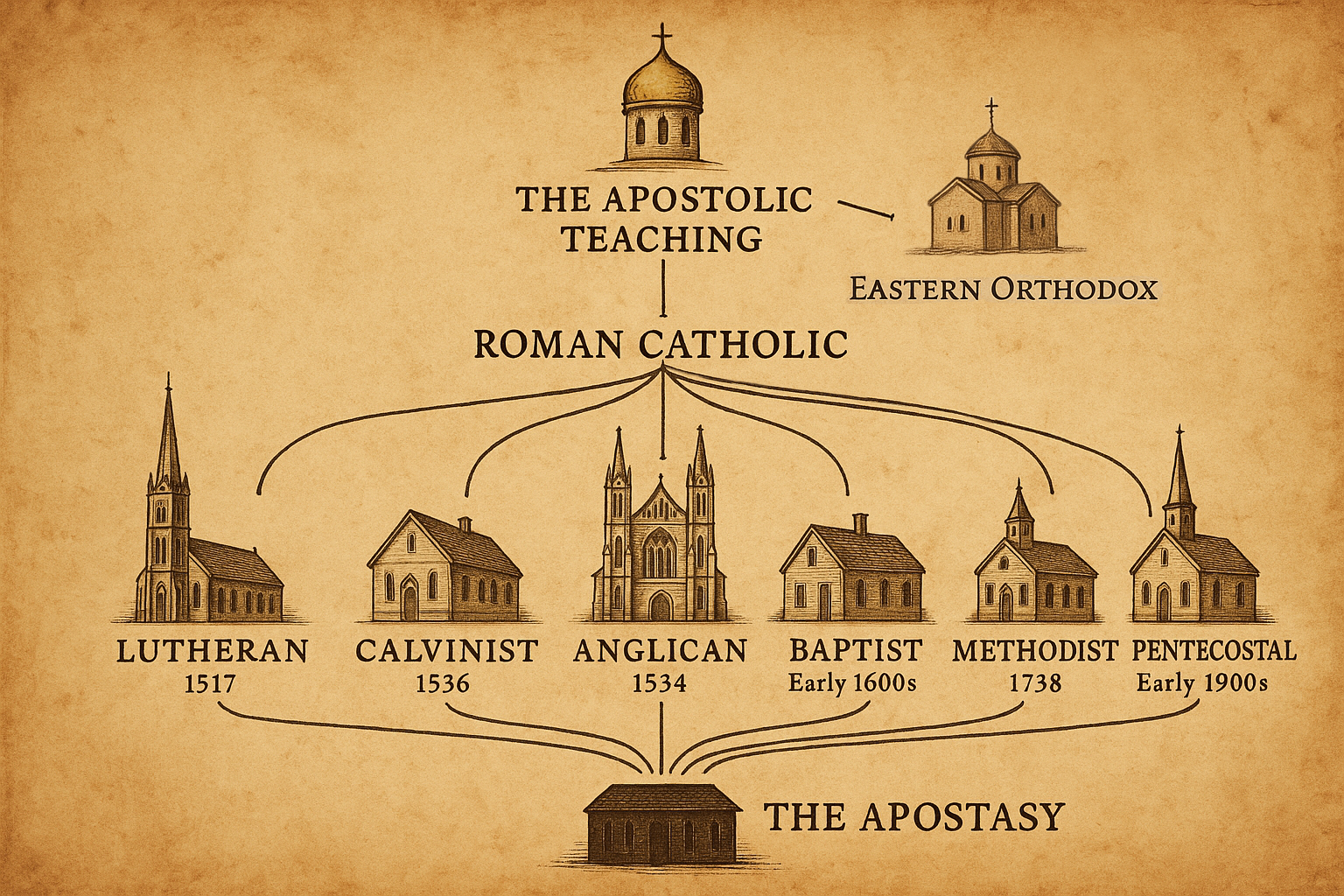
The religious movement known as the Protestant Reformation erupted in Europe during the 1500s when Protestant Reformers like Luther, Calvin, and Zwingli protested against Roman Catholic Church practices. Though the Reformers initially wanted to reform the Church from within, the Reformation evolved into something bigger— a spiritual restoration. And historical church restoration movements aimed at recovering what they believed the Catholic Church had either lost or distorted. The catch? Once these reformers announced the lost doctrines of the Early Church needed restoration, everyone wanted them back, but nobody agreed on exactly what was lost or how to restore it.
A Simple History of How Protestant Denominations Formed
Looking at Protestant denominations’ origins, we can trace clear lineages. The Lutherans stem from Martin Luther in Germany:
- The first-generation Lutherans believed Luther had restored lost Truth to their Protestant Church.
- Most Lutherans today don’t actually believe the same things Luther believed.
Maybe you didn’t know tradition provides mental security for people who are too lazy to think for themselves. Now that wasn’t very nice, was it? Oh well, too late.
The other denominations are:
- The Reformed churches, which sprouted from Calvin and Zwingli in Switzerland.
- The Presbyterians, who trace back to John Knox in Scotland, who “studied Calvinism in Switzerland” and pushed for church governance by elders (presbyters).
- The Mennonites, who followed Menno Simons, who carried on Conrad Grebel’s radical idea that church should be separate from state—a concept that later shaped America’s Constitution.
The English Reformation and the Puritan Movement
The English Reformation took a different path, sparked by Henry VIII’s less-than-spiritual desire for a divorce. He simply replaced the Pope with himself as head of the Church of England. This created what Hughes calls “a lingering desire for a more complete restoration” among English Protestants, leading to the Puritans, who sought “the reform of Reformation itself,” as John Milton put it.
When Elizabeth I took the throne in 1558, these pious souls looked forward with high hopes of seeing the Church of England restored to its former purity. Thus began a century (1560–1660) of frustrated yearnings for thorough reformation. Some Puritans worked within the system as “Non-separatists,” while others became “Separatists.”
The American Colony: Puritans in the New World
Some Puritans fled to places like Amsterdam and eventually America:
- In 1608, one group of English Separatists, led by John Smyth, established the first English Baptist church in Amsterdam.
- By 1620, some formerly associated with this group became the “Pilgrims” who sailed to Plymouth on the Mayflower. The Massachusetts Bay Colony experiment deserves special attention.
- In 1629, Non-separatist Puritans established this colony intending to create “a city set on a hill” that would inspire reformation back in England.
All were committed to restoring the apostolic pattern of church government:
“Once reform-minded immigrants found themselves in a congenial setting far from persecuting bishops, they turned in a hundred ways to recovery of first-time ordinances.”
(Richard T. Hughes, The American Quest for the Primitive Church, Urbana: University of Illinois Press, 1988, p. 26)
“Their governing aim in every case was to make the fullest possible withdrawal from the Catholic and Anglican error of ‘human invention.’”
(Richard T. Hughes, The American Quest for the Primitive Church, Urbana: University of Illinois Press, 1988, p. 27)
But these idealists ran into trouble with Roger Williams, who said their restoration hadn’t gone far enough. Williams identified four marks of the true Church:
- only truly converted members;
- pure observance of God’s ordinances, rejecting human inventions;
- small, humble congregations rather than massive churches;
- and spiritual government separate from civil government.
In 1684, the English government forced the colony to abandon their church-state scheme, vindicating Williams’ charges.
The Great Awakening and John Wesley’s Influence on Christians
The Great Awakenings and Protestant Revival Movements added another chapter when John Wesley (1703–1791) began street preaching. Wesley combined personal salvation with restoration, diving deep into the doctrinal controversies in the Early Church. He believed the Church’s fall happened before Constantine’s time, even viewing some heretical groups like the Montanists favorably because he saw in them authentic Christian vitality.
Wesley’s influence exploded across America, especially among Baptists:
“In the latter half of the eighteenth century the impact of the Great Awakening on the Baptists was strong, and the Calvinistic orientation was modified by a shift toward a pietistic and revivalistic evangelicalism.”
(Richard T. Hughes, The American Quest for the Primitive Church, Urbana: University of Illinois Press, 1988, p. 145)
From a single congregation in 1608, Baptists became America’s largest denomination by 1800.
The Rise of Baptist Movements
The historical attempts to recover Early Church Truths continued with Alexander Campbell, who sought to unite Christians through “restoration of primitive apostolic patterns.” His influence grew rapidly among Baptists until:
“by 1830 the churches under Campbell influence had largely withdrawn to become a principal element in the indigenous American denomination called the Disciples of Christ.”
(Richard T. Hughes, The American Quest for the Primitive Church, Urbana: University of Illinois Press, 1988, pp. 145–146)
Some Baptist groups, like the Primitive Baptists, claimed complete restoration:
“... are in search of the true church on the basis of what they find in the Bible and in the familiar traditions that they believe to be soundly, biblically based.”
(Richard T. Hughes, The American Quest for the Primitive Church, Urbana: University of Illinois Press, 1988, p. 150)
Others, following J.R. Graves’ “Old Landmark” movement in 1851, claimed they never lost anything, arguing for direct succession from Apostolic churches.
From Holiness Movement to Modern Protestantism
The Holiness Movement emerged next, with Believers pursuing restoration through personal holiness and Wesley’s “second definite work of grace.” In 1901, students at a Topeka, Kansas Bible School determined that speaking in tongues was the sign of the “Baptism of the Holy Spirit.” This sparked the Pentecostal movement, which saw their gifts as the “Latter Rain” marking the End Times, just as Pentecost was the “Early Rain” at the beginning.
“Over the past eighty years, this has shifted dramatically. Instead of seeking to restore Apostolic Christianity, conservative Protestants now focus on ‘church renewal’ or trying to ‘bring America back to God.’”
While some pursued spiritual gifts, others took a different path. The Fundamentalist Movement began when conservatives—mainly Baptists and Presbyterians—feared losing vital Protestant doctrines to modernism. Darwin’s 1859 publication of Origin of Species challenged Scripture’s authority, leading fundamentalists to defend what they believed had already been restored.
Over the past eighty years, this has shifted dramatically. Instead of seeking to restore Apostolic Christianity, conservative Protestants now focus on “church renewal” or trying to “bring America back to God.” Their restoration zeal found expression in the 1950s and 1960s when the Evangelical wing pushed for a “revival of evangelical Christianity.” By the late 1980s, this morphed into a patriotic call to “bring America back to God”—trying to restore something America never had rather than what the Church actually lost.
When Did the Early Church Lose the Truth of the Original Teachings?
So what exactly was lost? The Apostolic Teaching—also called “The Way”—disappeared around A.D. 200 when Tertullian and Hippolytus left the orthodox Church. Since then, speculation about Scripture’s meaning replaced The Teaching that Jesus gave the Apostles. Unlike previous Protestant Reformers who looked mainly to the New Testament and Early Church Fathers, The Apostolic Teaching can only be found in properly understanding the Old Testament message.
Why Has No Protestant Group Ever Fully Restored What Was Lost?
Why couldn’t the Protestant Reformers restore the Truth that was lost? Because:
there is a time for every event under heaven.
(Ecclesiastes 3:1b) —NASB
and their time hadn’t come. That time is now. You might think that’s ridiculous, and maybe it is. But if you’re Protestant, logic demands you face some choices:
- You must believe the Church either lost something special or it didn’t.
- If you don’t believe anything was lost, you should logically be Catholic or Orthodox.
- If you believe something was lost, you must think either some Protestant group has fully restored it or none have.
- If you believe someone has restored it all, you should join them.
- If you don’t see anyone who has fully restored it, you must decide whether to keep looking or give up hope.
I’m not claiming anything more than other ministers claim—God called me to do this work. The only difference is in what needs restoring. I claim it’s the Apostolic Teaching that’s been lost since A.D. 200. You don’t have to believe me. But as a Protestant, you can’t logically claim nothing was ever lost. That’s why your spiritual forefathers protested in the first place.
That wasn’t so difficult, was it? Looking at it logically, it’s a simple decision.
Conclusion
The Protestant Reformation is one of continuous splintering, with each new group convinced they’d finally restored what was lost. From Luther’s rebellion against Catholic authority to modern evangelical calls to “bring America back to God,” Protestants have shifted their restoration focus from recovering The lost Apostolic Teaching to reviving cultural Christianity.
Yet the core question remains: If something truly was lost around A.D. 200 when The Apostolic Teaching was distorted, has any Protestant group truly found it? The evidence suggests they haven’t, which leaves today’s Protestants with some uncomfortable logical choices about where they stand.
This blog post provides a condensed overview of the full ebook, which dives deeper into the historical developments, theological debates, and lasting implications of Protestant restoration movements. In the complete PDF version, you’ll find detailed accounts of key Reformers, analysis of their theological positions, and a thorough examination of how their efforts shaped modern Christianity.
Learn more by exploring our extensive collection of free resources found in the Online Library page on our website.
FREE Downloadable Content
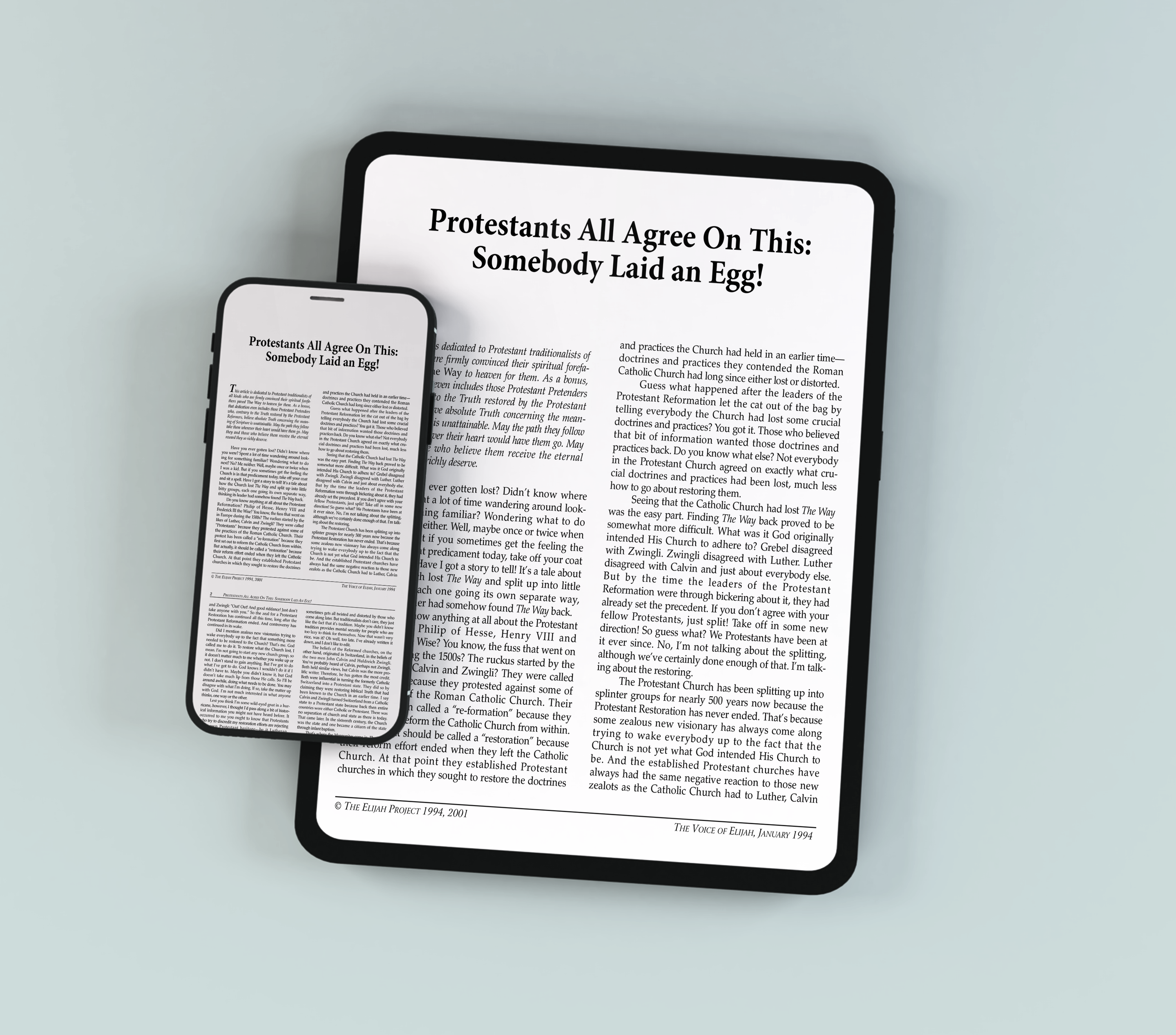
Free ebook: Protestants All Agree on This: Somebody Laid an Egg!
View the full ebook based off this article. Learn more about End Times truths. The ebook (PDF) provides more detailed explanations, additional scriptural references, and further insights into The Apostolic Teaching. We encourage you to download it for a more comprehensive understanding of these vital concepts.
Read ebook Now!U.S. Only Offer: Get a Hard Copy of the HSSB Bible. Limited Supply!
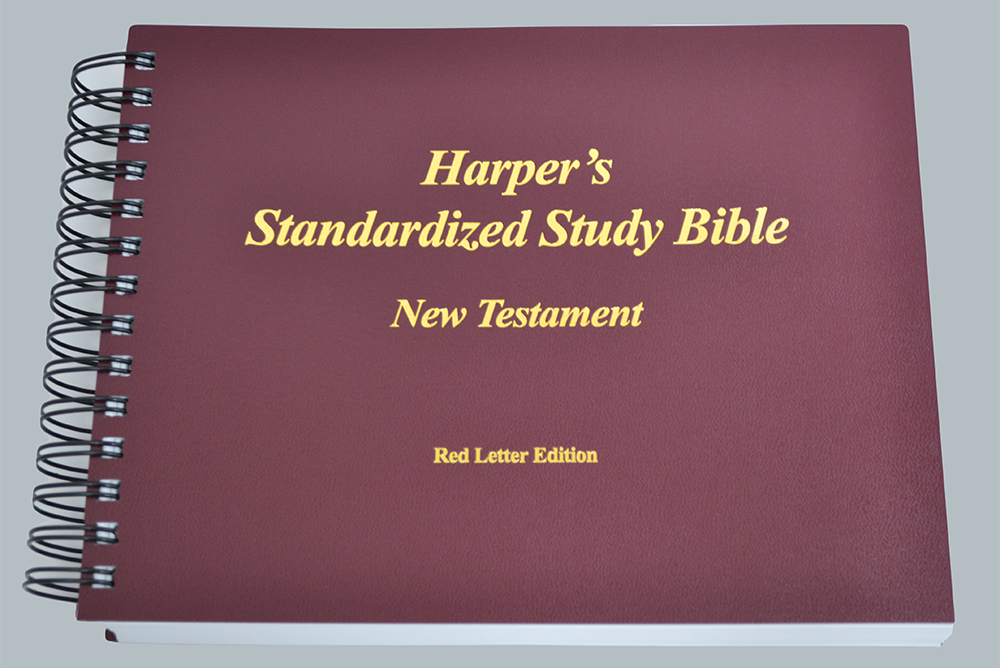
Harper’s Standardized Study Bible New Testament, Red Letter Edition
An original translation of the Greek New Testament into English with Jesus Christ’s words printed in red. The red text enables readers to easily locate the Lord’s spoken words at a glance. A true study Bible that is spiral bound and lays flat for ease of note taking. Each page dedicates one column for personal notes.
Learn More