

How God “Built The House” of Israel: Understand 1 of 7 Hidden Messages in the Hebrew Scriptures
The Hebrew Scriptures: A Silent Witness to the Past
The Hebrew Scriptures—the Christian “Old Testament”—is one such surviving witness. It stands today much as it has for the past 2500 years, silently testifying concerning Ages past. And the idiot factor continues to believe it proclaims a benign message about a god of unconditional love. However, they do so only because they have chosen to believe that is what should have been. The Truth is, no matter how desperately those folks want to believe that lie, the Hebrew Scriptures tell quite a different story. They describe the God of Israel in no uncertain terms, and they tell us He is a God of unmitigated wrath.
Think about it:
- Change is the price we all pay for participating in history.
- And one day you, too, will be “history.”
- Just like everything else, you will fall prey to the inevitable “here today and gone tomorrow.”
That’s a sobering thought, isn’t it? Like it or not, you will eventually submit to that sudden change. Face the facts, folks. You are going to shed your mortal body just as surely as a snake sheds its skin. That’s when you will be forced to deal with the angry God of Israel.
Now, I realize my explanation of the seven messages hidden in the Hebrew Scriptures is not only subject to dispute, it is extremely controversial. So it will certainly be disputed. That’s to be expected. Most folks would rather argue over minute details than agree with the obvious. So their kind will no doubt reject what I have to say. However, scholars only vaguely understand:
- Babylonian,
- Canaanite,
- Greek,
- and Hebrew texts
from which I got my information. That is in spite of decades spent trying to understand the areas of:
- biblical theology,
- Sumerology,
- Egyptology,
- Assyriology,
- Ugaritic mythology,
- comparative religion,
- and half a dozen other related fields.
The First Hidden Message in the Bible: “The House”
After seven years of writing about it in a cryptic, little-bit-here-little-bit-there fashion, I am now free to explain the sometimes sordid story that the Hebrew Scriptures tell about how God “built The House” of Israel. You know— “The House.” That’s the first of the seven hidden messages in the Old Testament the Prophets of God concealed in the Hebrew Scriptures. This concept is intrinsically connected to the symbolic meaning of “building a house” in Hebrew thought.
The only way anyone will ever understand the Hebrew Scriptures is to first understand the culture and religion of the people living at the time they were written.
The Scriptures’ chronicle of how God “built The House” of Israel is, at its heart, a sarcastic mockery of the ridiculous religion the ancient Canaanites firmly believed and enthusiastically practiced. I have explained their religion in various issues of The Voice of Elijah® newsletter. It’s a torrid tale of how idiot folk strived to attain eternal life by piously reciting:
- religious pornography,
- religiously engaging in sexual intercourse with sacred prostitutes working out of the church-house,
- and inhumanely sacrificing bastard children intentionally conceived during sacred sex rites.
The Importance of Cultural Context in Understanding Scripture
For the benefit of all who may decide to stay the course, let me remind you again of something I have stated elsewhere. The only way anyone will ever understand the Hebrew Scriptures is to first understand the culture and religion of the people living at the time they were written, including practices like sacred prostitution and the role of the zonah in Canaanite religion.
How Does the Bible Use Parabolic Imagery Related to Ancient Canaanite Beliefs?
You see, the Prophets use various Hebrew idioms, all with specific meaning, to tell the intricately detailed story of a male child—the One Moses calls “The Man”—Whom the God of Israel promised King David He would engender for him through a virgin. The Hebrew idioms the Prophets used are all based on images found in the myths and sacred rituals of the ancient Canaanites. As the story of the Prophets unfolds, however, we are also told that because of the circumstances of His birth, “The Man” Whom God was going to engender would not be His Son. He would first be the Son of David and only afterward the Son of God.
Everything I have just told you (and a whole lot more) lies hidden in the Hebrew idioms and mythological images I am going to show you in the Hebrew Scriptures.
God’s Wrath vs. Modern Interpretations
Should you view the things I teach as a mere intellectual curiosity, I remind you once again why the Truth was hidden. The Prophets intentionally concealed it to mock those who refused to believe what they heard. If that shoe fits you quite comfortably, let me point out one of the more elegant details that God Himself stitched into its uppers:
The kings of the earth take their stand,
And the rulers take counsel together
Against the Lord and against His Anointed:
“Let us tear their fetters apart,
And cast away their cords from us!”
He who sits in the heavens laughs,
The Lord scoffs at them.
Then He will speak to them in His anger
And terrify them in His fury.
(Psalm 2:2–5) —NASB
That doesn’t sound like the goofy god of unconditional love you hear taught in the Church today, does it? That’s because the god worshiped in most churches today isn’t the God the Prophets describe in the Hebrew Scriptures. If you didn’t already know that, you should spend more time reading the Old Testament. Unfortunately, if you don’t understand the message of the Old Testament you can’t fully appreciate that of the New. It mentions the wrath of the Old Testament God of Israel no less than twenty-seven times.
What Is the Meaning of “Build a House” in Ancient Hebrew?
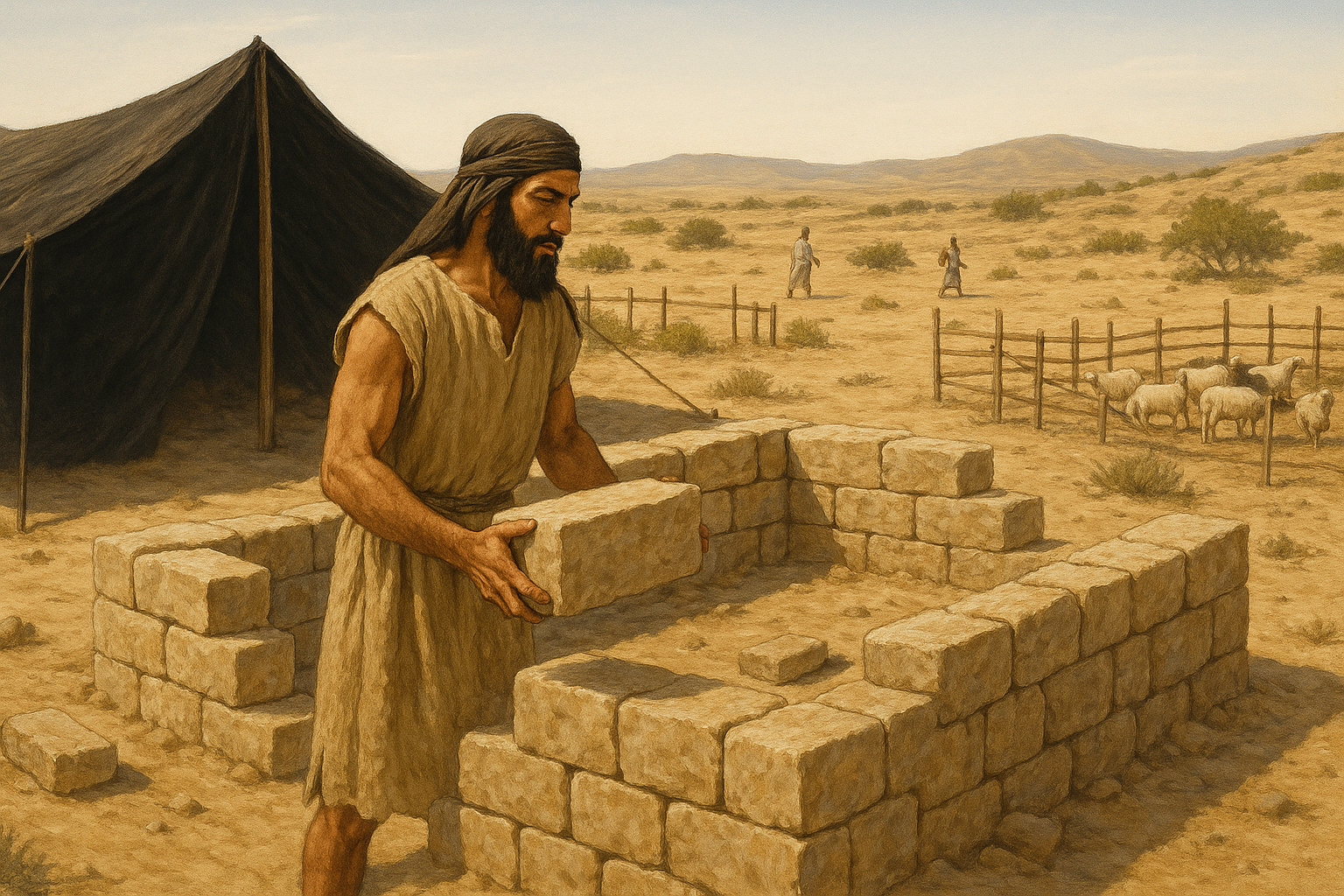
Let’s get one thing straight from the outset. In the ancient Near East, a “house” was a family long before it was ever a building with four walls and a roof. That can be seen from the fact that the Hebrew words for “son,” “daughter,” and “house” all come from the same root as the Hebrew verb banah, which means “build.” Not surprisingly, that verb also carries the meaning of “create/procreate.” And the three nouns I just mentioned were originally used to refer to “what has been procreated.” This understanding is crucial for grasping the symbolic meaning of the Hebrew idiom “building a house”, which is also related to practices like levirate marriage.
How the Ancient Near Eastern Fertility Cults Operated
Ancient Canaanite sacred sex rituals influenced the ancient semitic culture, which was patriarchal. That is, lineage was reckoned through the male. So all a man had to do to “build a house” was “take” a woman and “enter” her. Any “seed” “raised up” from their union belonged to him unless he stipulated otherwise. (The words in quotes are all technical terms that refer specifically to the process of “building a house.”) As we shall see, a woman was necessary to the house-building process, but any woman would suffice to “raise up a seed” for the man.
As far as the ancients were concerned, the “seed” (semen) of the man was the only essential ingredient. Their mind-set is more easily understood if you keep in mind the fact that they were ignorant of modern physiology. They knew nothing of the interaction of a sperm with an egg. They were obviously aware that semen was a seed of some kind. And they surmised that a male could “plant” that “seed” in a female and thereby “raise up a seed.” But from their perspective, a woman was like the ground in which they planted every other kind of seed. She merely incubated the seed of the man until it sprouted.
What Was the Role of Sacred Prostitution in Ancient Canaanite Religion?
The women who helped “build The House” of a man fell into one of three categories:
- There were, first of all, free women.
- Then there were concubines
- and, finally, the class of women known as the zonah.
Free women voluntarily gave up their position in “The House” of their father and “entered” “The House” of another man. Circumstances varied from house to house, of course, but cultural norms still considered these women to be inferior to the “master” or “lord” of “The House” they had entered.
Biblical Mockery of Canaanite Religious Practices
In the Virgin Birth of Christ, God mocks the asinine notion that eternal life could be attained by sacrificing the son of a god born to a virgin. In God’s parabolic pantomime, the Virgin Mary was a zonah that God “entered” to “raise up a seed” for David—a sacred prostitute He “took” to “build a house” for His “Name” as part of a divine ritual. Now, before some fool objects that “prostitute” is too crass a term to apply to Mary, I should probably tell you it doesn’t refer to Mary. The only part of the parabolic image that applies to Mary is that of the virgin. That’s what she was. The goddess part applies to Israel, the sacred prostitute (zonah) that Ezekiel denounces for her licentiousness. God merely dressed Mary in the guise of the virgin goddess.
You see, Ezekiel tells us that when Israel sinned against God, she became a zonah. That meant she made herself available to anyone, God included, who desired to use her to “build a house.” In the wisdom of God, however, the burden of bearing Israel’s obligation as a sacred prostitute fell on Mary, the mother of Jesus. How could that be? Actually, it was quite simple. I have already explained elsewhere the process whereby Mary became “The Remnant” of David. When God finished His work of lopping off “branches,” Mary alone remained as “The Remnant” of David.
“It’s a complex web of parabolic imagery that exposes the folly of ancient fertility cults.”
But that’s just one example of God orchestrating an elaborate parabolic pantomime to mock the stupidity of men. I’ll tell you all about several others before I am through explaining “The House” message.
So there you have it—God’s elaborate mockery of Canaanite religion, all hidden in plain sight within the Hebrew Scriptures. From:
- sacred prostitutes to virgin births,
- from “building houses” to “raising up seed,”
it’s a complex web of parabolic imagery that exposes the folly of ancient fertility cults. And at the center of it all? A God of wrath, not unconditional love, ready to judge those who twist His message.
For a more comprehensive understanding of the hidden messages, the full ebook is available for download. It provides deeper insights and more detailed explanations of the concepts introduced here. Additionally, our Online Library on our website offers a variety of free materials for those interested in further exploration of “The House” message and ancient Canaanite beliefs.
FREE Downloadable Content
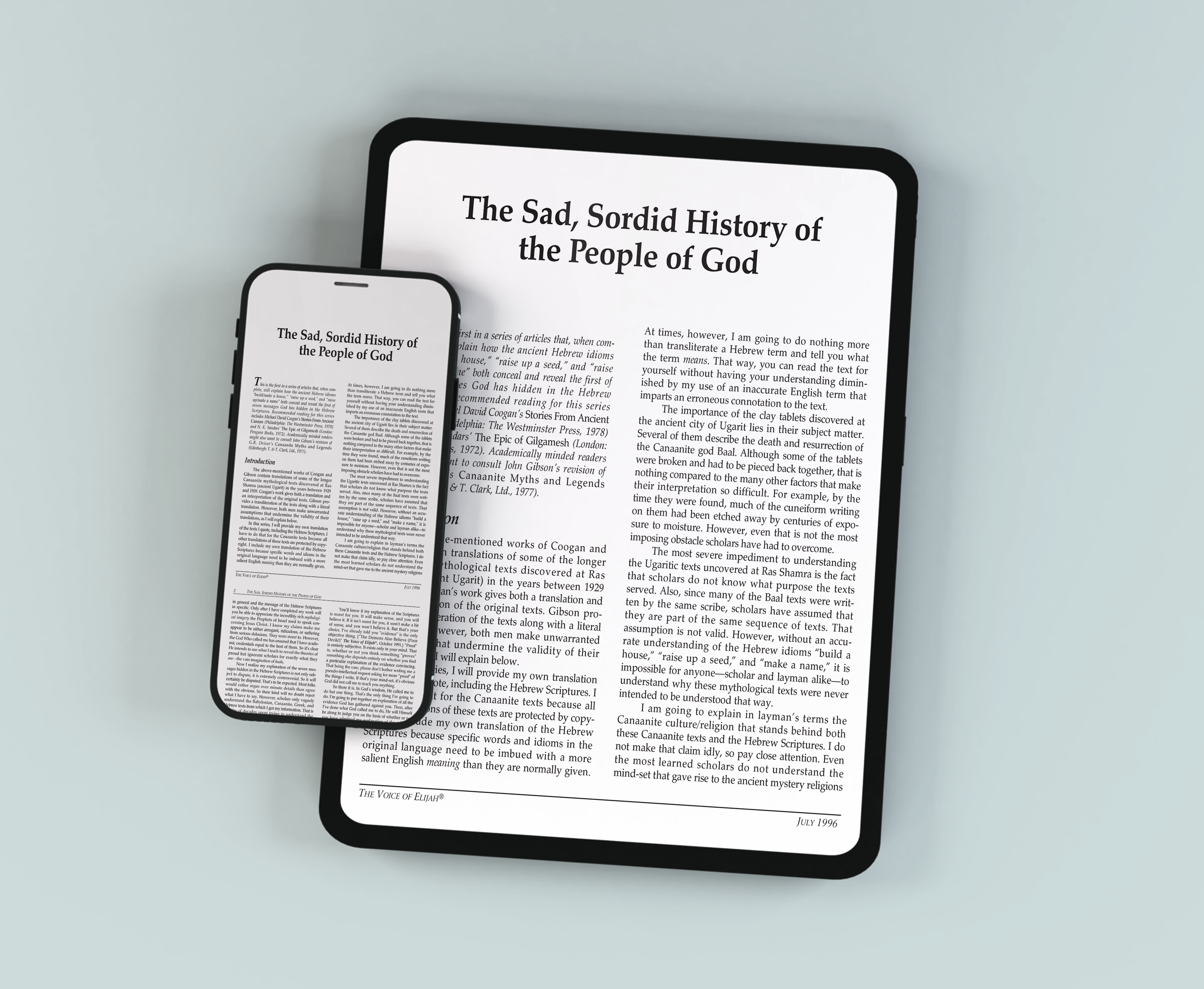
Free ebook: The Sad, Sordid History of the People of God
View the full ebook based off this article. Learn more about End Times truths. The ebook (PDF) provides more detailed explanations, additional scriptural references, and further insights into The Apostolic Teaching. We encourage you to download it for a more comprehensive understanding of these vital concepts.
Read ebook Now!U.S. Only Offer: Get a Hard Copy of the HSSB Bible. Limited Supply!
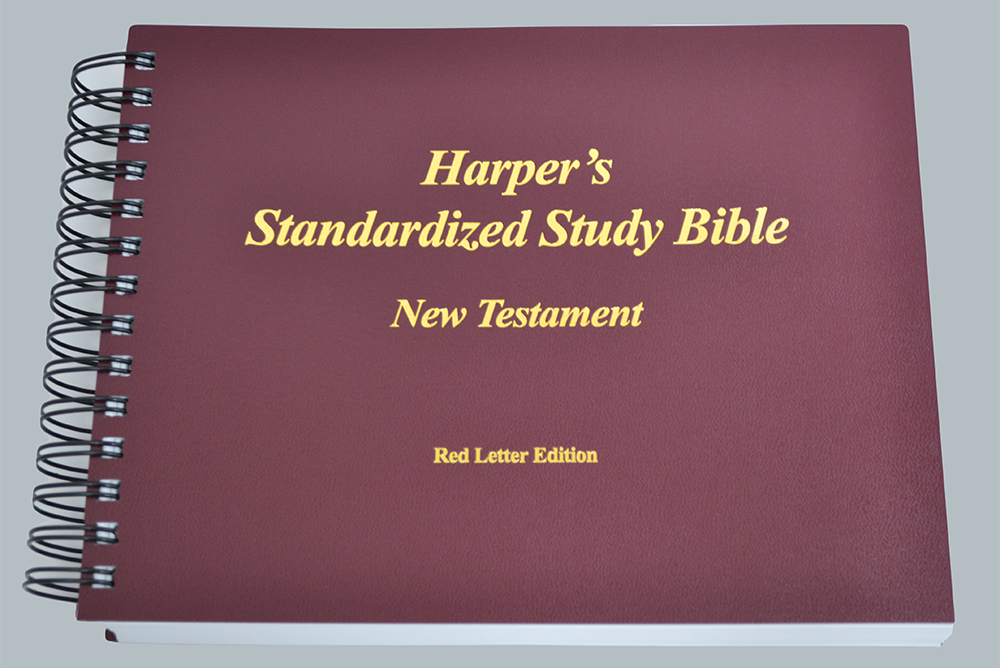
Harper’s Standardized Study Bible, New Testament, Red Letter Edition
An original translation of the Greek New Testament into English with Jesus Christ’s words printed in red. The red text enables readers to easily locate the Lord’s spoken words at a glance. A true study Bible that is spiral bound and lays flat for ease of note taking. Each page dedicates one column for personal notes.
Learn More