Kierkegaard Was a Pretender of the Worst Sort
Kierkegaard’s influence on Christianity has been profound, leading to significant consequences of his rejection of objective Truth for contemporary Christians. To understand the depth of this deception, we must first define some basic terms:
- an Idiot is one who confidently carries on concerning something he knows nothing about.
- However, an idiot is greatly surpassed in ignorance by the Imbecile who assumes he has learned some great esoteric truth while sitting at the feet of the idiot.
- The Moron, by way of contrast, doesn’t even bother to sit. Like a talking parrot, he repetitiously recites—at the most appropriate (or, most often, inappropriate) time—the trite phrases he has heard the idiot and the imbecile use.
Kierkegaard, (1813–1855), was a man plagued by mental instability. His family history was:
- rife with depression and suicidal tendencies,
- and he himself grappled with thoughts of self-destruction.
This unstable mind became the breeding ground for satanic ideas that would later infect the Church like a virulent disease. Kierkegaard was a Pretender of the worst sort, never claiming to be a Christian himself, yet his followers have mistakenly assumed he was.
Why Is Kierkegaard Considered a Threat to Traditional Christian Faith?
The core of Kierkegaard’s folly lies in his redefinition of faith. Traditionally, Christian faith had always been rooted in belief in specific theological doctrines. Kierkegaard, unable to believe these specific doctrines himself, decided to change the rules of the game.
He argued that:
- faith should not be based on Christian doctrine at all,
- but rather on the belief that one is “becoming” what one ought to be.
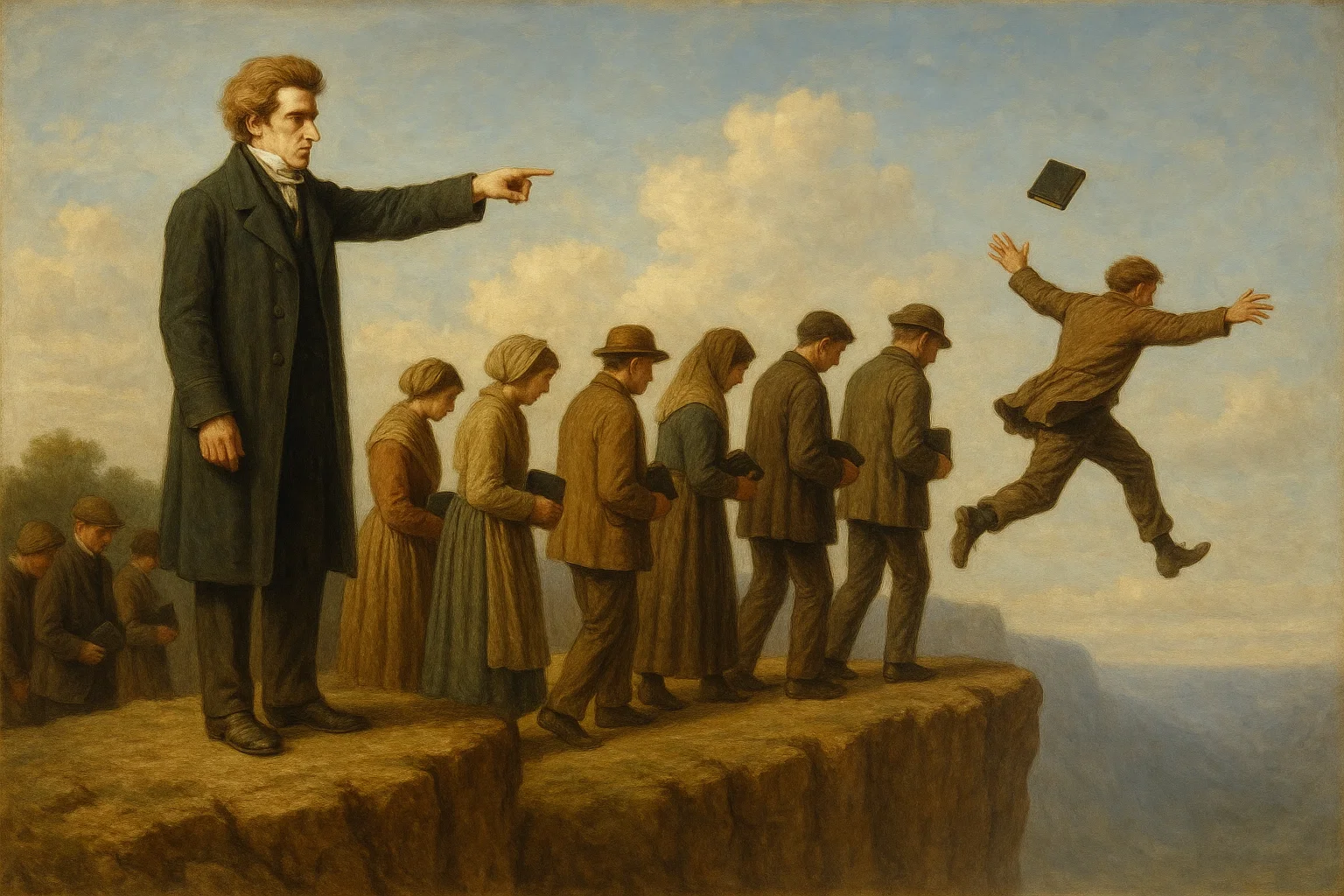
This shift from objective Truth vs. subjective experience in Christianity opened the floodgates for all manner of delusion to enter Church doctrine. Kierkegaard’s infamous “leap of faith” theology became a means for unbelievers to convince themselves they believed when, in fact, they did not. It was a masterful deception, allowing Pretenders in the Church to claim to be “Christian” without actually believing any of its fundamental Truths.
“Kierkegaard’s infamous ‘leap of faith’ theology became a means for unbelievers to convince themselves they believed when, in fact, they did not.”
Kierkegaard’s impact extends far beyond his own writings. His ideas have influenced philosophers and theologians who, in turn, have shaped the thinking of all Christians in our time—conservatives and liberals alike. The result is a Church filled with Pretenders who claim to be “Christian” without ever experiencing:
- the fear of God or
- genuine repentance.
What Are the Dangers of Kierkegaard’s “Leap of Faith” in the Church?
One of the most insidious aspects of Kierkegaard’s philosophy is his rejection of reason as a basis for faith. He argued that:
- Christian beliefs are “absurd” and
- that faith operates “on the farther side of explanation.”
This notion has led most to embrace a “faith” without content (“leap of faith”), one that is devoid of any specific beliefs beyond a vague hope in their own “becoming” something they are not. Kierkegaard insisted that one could “find God” only by being totally honest with oneself. Yet, since he personally did not believe in the Person or work of Jesus Christ, his solution was to lie to himself, telling himself he believed the Truth of Christianity when, in fact, he didn’t.
How Does Kierkegaard’s Philosophy Differ From Protestant Reformers Like John Calvin?
Kierkegaard’s views stand in stark contrast to the teachings of the Protestant Reformers. John Calvin, for instance, believed that the only truly rational person was one who had been born again through belief in Jesus Christ. Calvin understood that the unregenerate person lacks the ability to understand the Truth concerning God. Kierkegaard, in his arrogance, dismissed this doctrine and set about creating a counterfeit “Christianity” for those who, like himself, could not believe in the divinity of Christ.
Consequences of Kierkegaard’s Rejection of Objective Truth for Contemporary Christians
The consequences of Kierkegaard’s folly are evident in the Church today.
- Many who claim to be Christians have no interest in learning the Truth of the Scriptures.
- They have bought into the asinine conjectures of one of Satan’s own, content with a faith that requires them to believe nothing more than that they believe.
- This contentless faith has led to a generation of Pretenders who approach God without fear or genuine repentance.
- They have embraced a god of their own making—a benign, benevolent being they can offend all week and still approach without trepidation on Sunday.
This is not the God of the Bible, Who is described as:
- hating wickedness and
- promising judgment on the unrepentant.
The Truth, which Kierkegaard and his followers have so skillfully obscured, is that we are saved by what we believe, not by the mere fact that we believe. Everyone believes something about God, but only those who believe the Truth about the Gospel of Jesus Christ revealed in the Scriptures will be saved. This Truth includes:
- the recognition that God is a God to be feared,
- that He hates wickedness,
- and that genuine repentance is necessary for salvation.
“... the Church has been inundated by Pretenders who do not believe in the same God as those who have genuinely repented and been born again.”
Satan, knowing that God intends to restore The Apostolic Teaching, has used Kierkegaard and others like him to discredit the notion that Christians must believe any definite theological content to be saved. This lie has infiltrated all segments of the Church, leading many to view faith as a subjective decision with no necessary connection to specific theological beliefs.
The danger of this thinking cannot be overstated. It has led to a Church filled with individuals who claim to be “Christian” but have never experienced the “fear and trembling” that the Apostle Paul describes in Philippians 2:12:
(1) So then, my beloved brothers, just as you have always attentively listened—
(a) not as only at my arrival,
(b) but now a lot more in my absence—bring about your own salvation with fear and trembling.(Philippians 2:12) —Harper’s Standardized Study Bible
These Pretenders preach a god of love without acknowledging the God of wrath described in the Bible. They conveniently ignore passages like Psalm 11:5–6, which clearly states that God hates the Wicked and will rain snares, fire, and brimstone upon them:
The Lord tests the righteous and the wicked,
And the one who loves violence His soul hates.
Upon the wicked He will rain snares;
Fire and brimstone and burning wind will be the portion of their cup.
(Psalm 11:5–6) —NASB
True Believers must wake up to the reality of the situation they are facing. Over the past two centuries, the Church has been inundated by Pretenders who do not believe in the same God as those who have genuinely repented and been born again. These Pretenders are:
- content with their delusion,
- comfortable in their belief that they can approach God without fear of any kind.
How Do Kierkegaard’s Views on Faith Challenge the Traditional Understanding of Salvation in Christianity?
It is crucial to understand that the Christian life is not, as Kierkegaard would have us believe, merely the confession that one knows what one ought to be. Truth is something to be believed and lived by. If someone truly knows what they ought to be, then that is what they will be if they actually believe the Truth.
Kierkegaard’s philosophy has led to a dangerous conflation of faith and hope. While hope is indeed a near kinsman to faith, they are not the same thing:
- Faith is based on belief in specific Truths,
- while hope is a subjective feeling.
Kierkegaard and his followers have elevated hope to the status of faith, leading a horde of Pretenders to firmly believe their subjective feelings are sufficient for salvation.
The time for theological arguments has passed. Those who wish to believe the lies they have been taught by the Pretenders in the Church must be left to their delusions. True Believers who can use logic and reason to see the Truth should focus on:
- believing and
- living according to the Truth they understand,
lest they become Satan’s fools and ready tools for his use.
What Are the Long-Term Consequences of Kierkegaard’s Influence on Conservative Christian Theology?
It’s important to note that Kierkegaard’s influence has not been limited to liberal theology. Even conservative Christian beliefs have been infected by his ideas. Many conservatives who rail against Kierkegaard’s “leap of faith” have unknowingly absorbed his notion that faith is a subjective decision. This belief has become so prevalent in our society that it’s rarely questioned, even in conservative circles.
“As the time of Christ’s Return draws near, it is more important than ever for True Believers to stand firm in the faith once delivered to the saints.”
The challenge for True Believers today is to identify and reject the false teachings that have infiltrated the ranks of the Church and return to the solid foundation of biblical Truth. This means embracing a faith that is based on specific theological content, not just a
- vague feeling or
- subjective experience.
It means recognizing that we are saved by what we believe, not merely by the act of believing that we believe.
As the time of Christ’s Return draws near, it is more important than ever for True Believers to stand firm in the faith once delivered to the saints. We must not be deceived by the smooth words of those who have watered down the Gospel or redefined faith to suit their own unbelief. Instead, we must cling to the Truth we have, living lives that reflect genuine repentance and fear of God, always ready to give an answer for the hope that is within us.
Key Takeaways From Kierkegaard’s Influence on Christianity
1. The Redefinition of Faith: From Objective Doctrine to Subjectivity
In conclusion, Søren Kierkegaard’s influence on Christianity has been profoundly negative. His redefinition of faith as:
- a subjective experience
- rather than belief in objective Truth
has opened the door for countless Pretenders to enter in the Church.
2. Kierkegaard’s Abandonment of Reason, Logic, and the Scriptures
His rejection of reason as a basis for what one believes has led many to embrace a contentless faith in modern Christianity that requires no:
- genuine repentance or
- fear of God.
The Church must awaken to the danger of the philosophical poison that has seeped into its teachings. We must return to a faith grounded in the objective Truth of Scripture, recognizing that God is not only:
- a God of love to those who truly believe
- but also a God of judgment to those who don’t.
Only then can we hope to separate True Believers from Pretenders who have overrun the Church.
We must be vigilant, testing all things against the Truth of Scripture. We must not be swayed by the smooth words of philosophers who would lead us astray. And above all, we must approach God with the fear and trembling that is due His holy name, for only then can we truly claim to be His Children.
3. The Focus on Subjective Beliefs and Personal Experience Rather than the Truth Found in the Bible
It is worth noting that Kierkegaard’s ideas have found fertile ground in the postmodern mind-set that dominates much of contemporary culture. The emphasis on:
- subjective truth and
- personal experience
aligns well with the postmodern rejection of absolute truth. This cultural shift has made it even easier for Kierkegaard’s distorted version of faith to take root in the Church, as many Believers find it more comfortable to embrace a faith that:
- doesn’t challenge their preconceptions or
- require them to submit to the demands of objective Truth.
True Believers Must Return to the Original Beliefs of the Early Church Fathers
In the face of this widespread deception, True Believers must stand firm. We must pay attention to:
- His wrath against sin and
- His demand for genuine repentance.
As we seek to follow in the footsteps of Christ, we must remember that our battle is:
- not against flesh and blood,
- but against the spiritual forces of wickedness in heavenly places.
Satan, the father of lies, is behind this great deception. He delights in seeing the Church filled with Pretenders who believe they are saved when, in fact, they have never:
- truly repented or
- placed their faith in the Truth of the Gospel of Jesus Christ.
In these Last Days, may we be found faithful. May we cling to the Truth and live it out in our daily lives. And may we always remember that Satan’s fools are indeed Satan’s tools, ever vigilant against the subtle deceptions that would lead us astray from the pure and undefiled faith once delivered to the saints.
FREE Downloadable Content
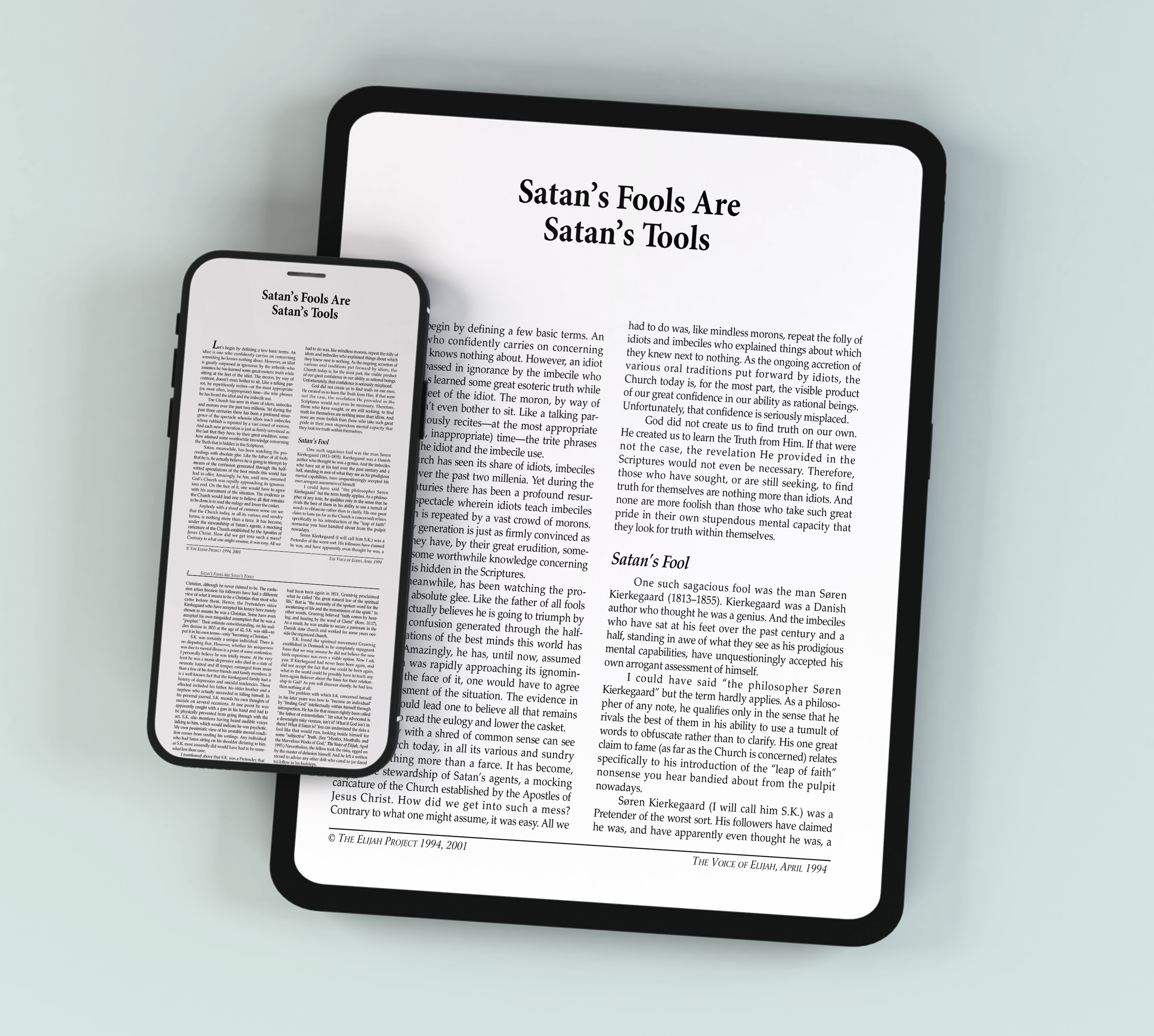
Free ebook: Satan’s Fools Are Satan’s Tools
This blog post is based on a free to read ebook (PDF) where you can learn more about End Times truths. Here you will get more detailed explanations, additional scriptural references, and further insights into The Apostolic Teaching. We encourage you to download it for a more comprehensive understanding of these vital concepts.
Read ebook Now!U.S. Only Offer: Get a Hard Copy of the HSSB Bible. Limited Supply!
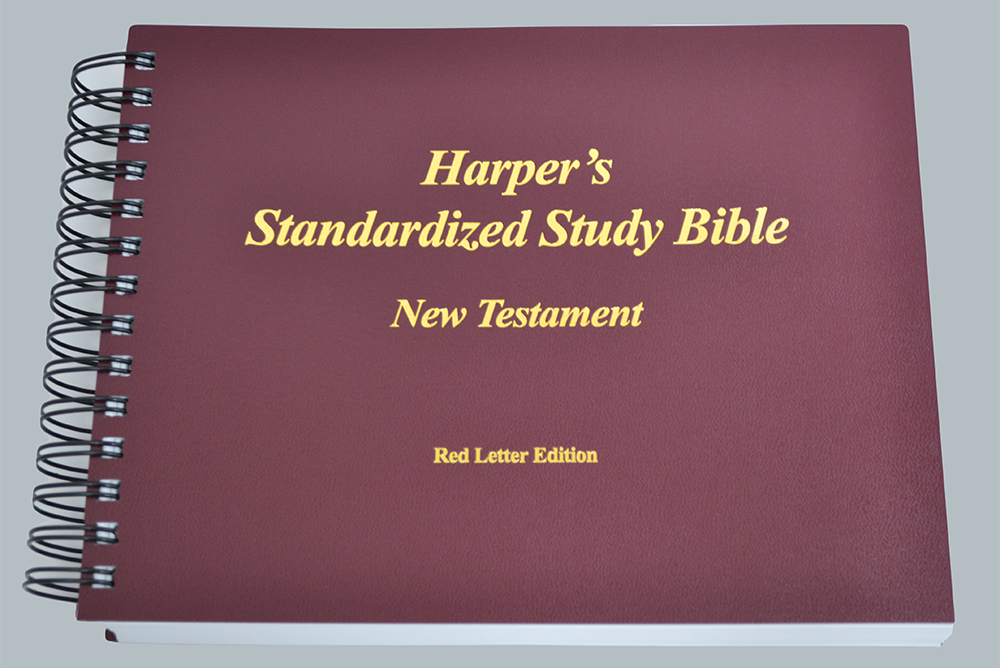
Harper’s Standardized Study Bible, New Testament, Red Letter Edition
An original translation of the Greek New Testament into English with Jesus Christ’s words printed in red. The red text enables readers to easily locate the Lord’s spoken words at a glance. A true study Bible that is spiral bound and lays flat for ease of note taking. Each page dedicates one column for personal notes.
Learn More