


What the Bible Really Says: Understanding The Hidden Teaching
The Bible is the only Book God ever authored, yet God didn’t write it Himself—He inspired others to do it over approximately fifteen hundred years. As the Apostle Paul said:
(4) Every Scripture {is}
(a) God-breathed and
(b) beneficial:(i) for teaching,
(ii) for publicly rebuking,
(iii) for correcting,
(iv) for tutoring with regard to the declaration of not guilty, so that the man of the {living} God may be perfectly suited—finished out—for every good work.(2 Timothy 3:16–17) —Harper’s Standardized Study Bible
Some might argue this presents a problem for understanding God’s message, but their arguments miss the point entirely. To understand The oral and written Teachings of Moses one must first make a crucial distinction: God didn’t tell the Prophets and Apostles what to say—He ensured they understood the Truth of what He had done and would do. Then they wrote whatever they felt inspired to say about that. What they said was true, but how they said it depended on their own creativity and ability to communicate. This explains why the Greek and Hebrew Scriptures don’t exhibit the same literary qualities throughout, but there is one further distinction the reader must make.
Prophecy and History in the Pentateuch
The distinction between prophecy and historical record in the Pentateuch serves an extremely vital purpose. The content of the first five books of the Bible set the stage for the rest of the Scriptures; they explain both what God had already done and what He was going to do. But you must first understand the distinction between The oral Teaching (oral Torah) and The written Teaching (written Torah).
The oral Teaching that Moses delivered to the sons of Israel at Mount Sinai was meant to clearly explain The written Teaching so Israel would be prepared for the time when The written Teaching would verify that The oral Teaching being taught has remained unchanged.
The point is, without an accurate understanding of The oral Teaching, a person will understand little, if any, of the written Teaching found in the Pentateuch. This system of checks and balances is crucial—if any generation of Israel still taught The original oral Teaching, they would still understand The cryptic written Teaching. Without that insight, they would fail to comprehend The written Teaching or even locate where the Truth was hidden in it. For that reason understanding that Moses used the Hebrew prophetic perfect tense as one of his most effective concealment methods is essential.
He masterfully used this technique to speak of future events as though they were past, making uninformed readers think they were reading history when they were actually reading prophecy. All the Prophets of Israel followed Moses’ lead in using this method, but he was the greatest of the Prophets, not only because of his understanding of the Truth but also because he initiated the concealment techniques the other Prophets used.
You’ll find both historical record and prophecy intermingled throughout Scripture; but confusing the two, especially in the Pentateuch, makes understanding the message of the Scriptures completely impossible. Moses intentionally embedded prophetic material within historical narrative to conceal the Truth from those who have not heard The oral Teaching. Therefore, the distinction between historical record and prophecy demands your careful attention.
- The historical passages explain why The oral Teaching at any point in time is or is not the same as The Teaching of Moses, while
- The prophetic passages combine with the historical passages to reveal what The oral Teaching will be at the End of the Age.
How Jesus referenced the oral Torah becomes strikingly clear in His confrontation with the Pharisees. Using a parabolic image of a witness testifying to Truth, Jesus said:
“Do not assume that I will make an accusation against you to the Father. The one who is making an accusation against you is Moses, in whom you have hoped. For if you believed Moses, you would believe Me; for that individual wrote about Me.”
(John 5:45–46) —Harper’s Standardized Study Bible
Jesus knew the Pharisees weren’t teaching The true oral Teaching, despite their claims to the contrary, because He understood The written Teaching that was hidden in the Pentateuch.
For Christians, understanding the oral Torah becomes absolutely essential because the Scriptures weren’t meant to teach—they were meant to confirm that one has, in fact, been accurately taught The oral Teaching of Moses. But before anyone can fully comprehend the reality encompassed in The written Teaching, they must first believe the witness provided by the Gospel. As Jesus proclaimed:
“And this good news of the fulfillment of the promise of the kingdom will be preached in the entire civilized world as a testimony to all the Gentiles. And then the consummation will come.”
(Matthew 24:14) —Harper’s Standardized Study Bible
The Bible’s Role as a Witness and the Church’s Role in Preserving the Truth
The Bible is a silent witness against both the Jews and the Church. As such, it serves a specific purpose that few understand. Moses directed that:
- His writings be preserved in the sanctuary “as a witness against you” (Deut. 31:26).
- Why? Because God knew Israel would “turn from the way which I have commanded you” (Deut. 31:29).
The Truth is, no generation before ours has had the necessary information to corroborate the Scriptures’ testimony.
This silent witness doesn’t just tell us what The Teaching actually is, it explains why the teaching of both the Jews and the Church is not what it should be.
The Church’s role in preserving and handing down The Teaching of Moses presents an uncomfortable reality. Today’s Church is the only true Israel, yet most deny it ever received any oral Teaching, even while every faction busily hands down their own version. And every generation foolishly adds to and takes away from whatever oral Teaching they received. If what they’ve heard is true they don’t need to change it—they only need to believe it. If it isn’t true, why did they believe it in the first place?
Pay Attention!
- If you choose to believe the Church has never had a complete understanding of the Truth, you have thereby denied the possibility that it understands the Truth today.
- If you deny the Church ever lost the Truth, you must believe there are various versions of the Truth—one for every segment of the Church in existence today.
Those are the most idiotic notions Satan has ever disseminated. Two contradictory beliefs cannot both be true; one (or both) must be a lie.
The witness metaphor extends beyond mere documentation. Consider the parabolic imagery:
- The role of a witness is to testify on the day of trial.
- That day on which the witness will testify—Judgment Day—is approaching swiftly.
- The testimony of the witness must first be heard to determine if sufficient evidence exists to proceed with prosecution.
For True Believers, understanding the oral Torah is essential because the Scriptures prepare them to testify as witnesses for the prosecution on that Great Day. The prophecy and historical record in the Pentateuch work together to establish this testimony. The written Teaching allows informed readers to look back from the future and corroborate that what they believe matches Moses’s original oral Teaching. This was God’s plan all along. How Jesus referenced the oral Torah demonstrates this divine intention, showing how even He relied on the testimony of this witness to challenge false teachers.
The Truth is, no generation before ours has had the necessary information to corroborate the Scriptures’ testimony. Previous generations couldn’t document ancient Canaanite and Egyptian beliefs—information crucial for understanding what Moses and the Prophets wrote. So it will happen—the complete testimony of the Hebrew Scriptures will be heard in our day whether you like it or not.
From Moses to Judgment Day: The Continuing Witness of The Teaching
The Church’s role in preserving The oral Teaching becomes paramount as we approach that Great Day. As Jesus told His disciples:
“But you will receive supernatural power when the Holy Spirit comes upon you; and you will be My witnesses both in Jerusalem and in all Judea and Samaria, even up to the last day of the Earth.”
(Acts 1:8) —Harper’s Standardized Study Bible
When people don’t understand the Truth, various theories can appear to fit the evidence. But when the Truth becomes known, those willing to believe can easily see that it alone fits all the evidence. You can believe that if you care to …
Two contradictory beliefs cannot both be true; one (or both) must be a lie.
The Hebrew Scriptures serve as both historical record and prophetic witness, carefully documenting the journey of The oral Teaching from Moses through subsequent generations. This dual nature allows them to verify:
- Whether Israel preserved The oral Teaching while also cryptically explaining The written Teaching that confirms its authenticity.
- Most critically, the Scriptures stand as a witness that will testify on Judgment Day regarding how faithfully God’s People have preserved and protected The oral Teaching, making the proper understanding of them essential for all who seek to know and follow the Truth.
For a deeper explanation of these profound concepts and their implications for understanding Scripture, we invite you to download our comprehensive ebook (PDF). The full version provides an analysis of the relationship between written and oral Teaching, detailed explanations of how Moses embedded The Teaching in the Pentateuch, and crucial insights into why this matters for True Believers today.
FREE Downloadable Content
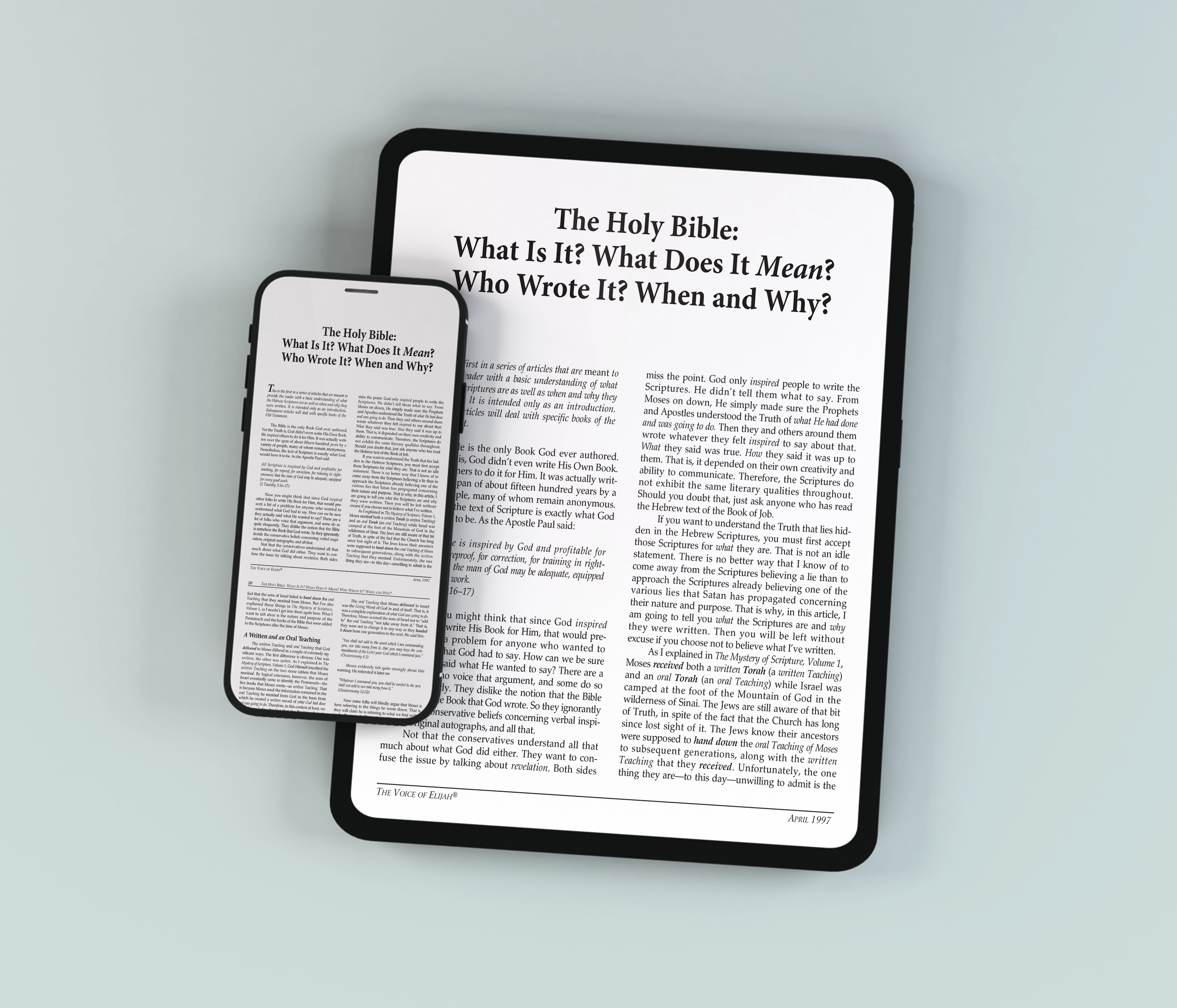
Free ebook: The Holy Bible: What Is It? What Does It Mean? Who Wrote It? When and Why?
View the full ebook based off this article. Learn more about End Times truths. The ebook (PDF) provides more detailed explanations, additional scriptural references, and further insights into The Apostolic Teaching. We encourage you to download it for a more comprehensive understanding of these vital concepts.
Read ebook Now!U.S. Only Offer: Get a Hard Copy of the HSSB Bible. Limited Supply!
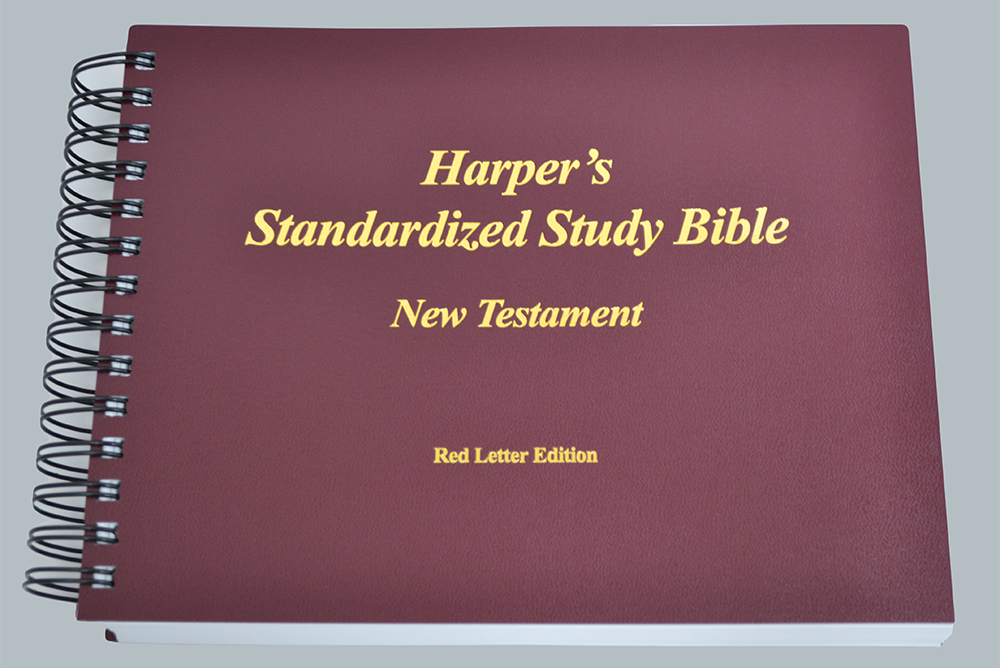
Harper’s Standardized Study Bible, New Testament, Red Letter Edition
An original translation of the Greek New Testament into English with Jesus Christ’s words printed in red. The red text enables readers to easily locate the Lord’s spoken words at a glance. A true study Bible that is spiral bound and lays flat for ease of note taking. Each page dedicates one column for personal notes.
Learn More