


Can You Recognize Phony Christian Beliefs?
Imagine being a counterfeiter in a country where fake currency is so common that nobody can tell the difference between real and counterfeit money anymore. Wouldn’t that be a perfect setup? You could print money in the morning and spend it all day long. But here’s something to consider:
- Would you accept a dollar for your hard work if you knew it might be worthless?
- If you weren’t concerned with ethical issues, maybe you’d just pass along the counterfeit bills to the next person. Not a bad deal, huh?
- But what if word got out that the government was calling in old currency for a completely new issue?
- Would that make you start checking whether your money was genuine?
This same principle applies when examining salvation by faith in today’s Christian landscape:
- Have you taken a good look at your religious beliefs lately?
- Could they be as phony as a three-dollar bill?
- With so many counterfeit Christian beliefs circulating, how can you be certain your eternal salvation isn’t hanging on to something completely false?
Let me put it plainly:
- Salvation by faith is a valid doctrine only if what one believes is true.
- Faith in a half-truth or a lie has never, and will never, save anyone.
Don’t believe me? Try believing that Judas died for your sins and Jesus was a traitor. See? Now you’re objecting. Logic is logic—you can’t have it both ways.
How to Know if Your Faith Is Genuine—An Explanation From the Apostle James
James addresses this issue head-on when he discusses how to identify religious deception in faith. He exhorts his readers to:
accept the implanted word, the {word} that is able to save your souls.
(James 1:21b) —Harper’s Standardized Study Bible
But notice what he says next—those who hear “the {word}” and don’t do it are “duping themselves” (James 1:22). James is talking about people who have heard the Truth yet choose to believe they can get by with giving God less than what He requires.
The perfect law of liberty in James isn’t some nebulous concept. When James mentions “the one who has peered into the complete law of our freedom” (intently examined the perfect law, the law of liberty) he’s referring to The Apostolic Teaching. Those promoting “sleazy-believism” today are quick to tell you what we “should do” or “would do” if only we “could do” what God requires. Then they conclude by affirming it’s too bad we’re just human and have to keep on sinning.
If you don’t act in accordance with what you say you believe, you don’t believe what you say you believe.
James gets even more specific about living a holy life in Christianity when he says, “clean and undefiled religion” means “to keep oneself unstained by the world.” You don’t hear that emphasized much nowadays, do you? Most focus on visiting orphans and widows, because that’s less threatening than discussing holiness.
What’s even more striking is how James addresses partiality as sin. My! My! He has the audacity to tell us that showing special attention to the rich while making poor folks sit in the cheap seats is sin? He states bluntly:
“if you are respecters of persons [Editor: show partiality], you are committing sin.”
(James 2:9b) —Harper’s Standardized Study Bible
That’s quite different from the “easy-believism” you hear preached today, isn’t it?
When examining true vs. counterfeit Christianity, James elaborates on faith and works:
What is the benefit, my brothers,
(a) if someone
(i) says that {he} has belief in God’s promise [Editor: faith] but
(ii) does not have works, can his belief in God’s promise [Editor: faith] not save him?(James 2:14) —Harper’s Standardized Study Bible
He uses the example of turning away someone in desperate need of food and clothing. His point? Talk is cheap. If you don’t act in accordance with what you say you believe, you don’t believe what you say you believe.
Can Faith Without Works Save You? The Relationship Between Faith, Works, and Salvation
Martin Luther, faced with this passage, “called the Book of James ‘an epistle of straw’” because he thought it contradicted salvation by faith. But James wasn’t undermining faith—he was reinforcing that what you believe determines what you do. Consider this: What if “the word” James understood provided the power to live a sinless life through belief? Then works wouldn’t even be an issue because:
- The person who didn’t believe couldn’t do what was required because they lacked the power.
- The one who believed would naturally do what was required because belief provided the necessary power.
This ties directly to the law written on the heart that Jeremiah prophesied about. Under the New Covenant relationship with God, instead of dwelling among His People, He would dwell in each one individually. The Prophets Jeremiah and Ezekiel tell us His dwelling place would be in a “new heart,” in a “new spirit,” and in the “law” of Moses “written on the heart.” As quoted in Hebrews:
“While putting My laws into their understanding,
I will also inscribe them on their hearts.”
(Hebrews 8:10b) —Harper’s Standardized Study Bible
James knew this Truth so well that he warned against the folly of teaching it to others:
Do not let many become Teachers, my brothers, aware that we {Teachers} will receive a greater judgment.
(James 3:1) —Harper’s Standardized Study Bible
Why? Because what you teach determines what people will do, provided they believe what you teach.
The Spirit residing in the bit of Truth you first believed when you were born again will always make your situation known to you—provided you’re willing to accept reality. Just don’t turn away and immediately forget what kind of person you saw yourself to be. If you do that, you’ll be one of those whom James says are “duping themselves.”
How can the Spirit dwell in The Teaching written on your heart? Because as John tells us:
In the beginning, there was the Word; and the Word was with the {living} God, and the Word was God. This Individual was with the {living} God in the beginning. Everything has come into being via Him, and not even one thing that has come into being has come into being apart from Him. Life was in Him, and His life was the Light of men. So the Light appears in the darkness, yet the darkness has never grasped it.
(John 1:1–5) —Harper’s Standardized Study Bible
You were born again because you heard the essential outlines of “a word of truth,” and it came alive in you through belief.
How the Loss of the Truth in A.D. 200 Affects Us Today
Something significant happened around A.D. 200 that affects our understanding of the Truth today. The Truth of The Apostolic Teaching was broken up—removed from its original framework of Hebrew idioms and parabolic imagery—and artificially set into the framework of Greek philosophy.
As far as God is concerned, the single most important issue has always been whether, when given opportunity, one rejects the Truth in favor of a lie.
Since then, bits and pieces of Truth have been available, but a coherent presentation of the Truth has not.
How Much Faith Do I Need to Be Saved?
This raises a crucial question: How much Truth does it take to be saved? You can be saved with a bare minimum of Truth. But that’s not the real issue; the real issue is:
- whether, when you hear the Truth, you reject it to believe a lie instead.
- You can believe a lie and still be saved, as long as you haven’t rejected the Truth to believe that lie.
That’s because, as far as God is concerned, the single most important issue has always been whether, when given opportunity, one rejects the Truth in favor of a lie.
Conclusion
You can’t believe the lie that says The Teaching requires nothing of you and still believe the Truth—they flatly contradict each other. The sole purpose of that lie is to allow you to hide from God’s Truth by “deluding yourself” and “deceiving your own heart.”
So the question is:
- What are you going to do now?
- Some of you don’t think it’s possible to know the Truth today, do you?
- That’s why you don’t believe what you’re reading, isn’t it?
Well, that’s your choice. But as Isaiah said, your refuge is going to be swept away:
“[I will turn] [a Decision Based on the Truth] [into a Line],
[And a Declaration of Not Guilty] [into a Level].
[Then Hail] [will sweep away] [{the} Shelter] [of a Lie],
[And Waters] [will overflow] [a Hiding Place].”
(Isaiah 28:17) —my interim translation
The ball is in your court. The message is clear:
- salvation requires more than just believing anything and everything that claims to be Christian Truth.
- True faith isn’t about merely accepting comfortable doctrines that demand nothing of you.
Rather, it’s about embracing the complete Truth written on our hearts through the New Covenant, which empowers us to live holy lives in accordance with what we believe. When we reject the Truth in favor of easy lies, we’re only deceiving ourselves.
This blog post summarizes key insights from the ebook “Counterfeiters, Con Artists (and the Consummate Consumer).” The ebook investigates deeper into:
- The Apostolic Teaching,
- the perfect law of liberty,
- and how the Truth was fragmented when removed from its original Hebrew framework around A.D. 200.
For more information and free materials about understanding the true message of Scripture, visit the Online Library.
FREE Downloadable Content
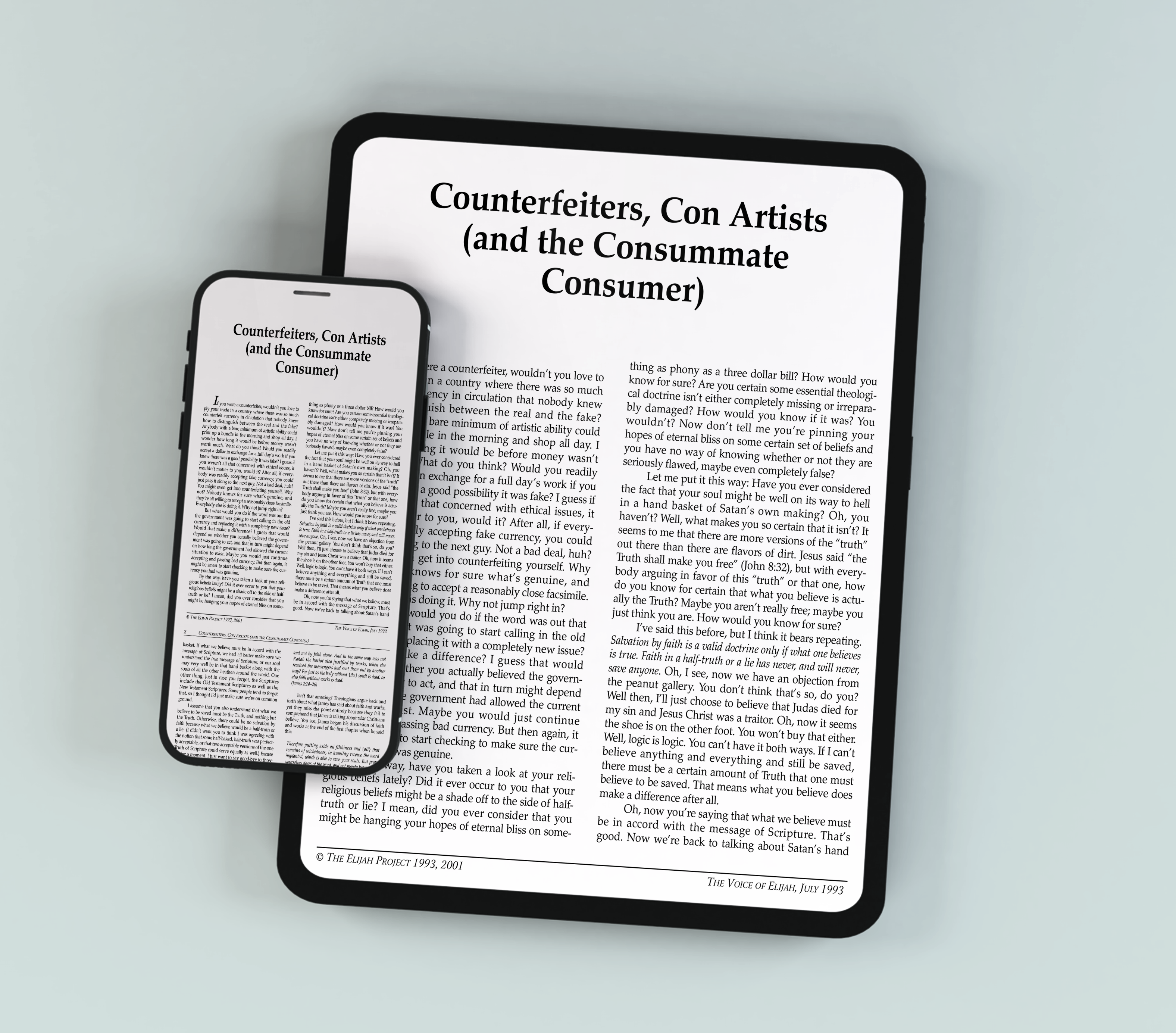
Free ebook: Counterfeiters, Con Artists (and the Consummate Consumer)
View the full ebook based off this article. Learn more about End Times truths. The ebook (PDF) provides more detailed explanations, additional scriptural references, and further insights into The Apostolic Teaching. We encourage you to download it for a more comprehensive understanding of these vital concepts.
Read ebook Now!U.S. Only Offer: Get a Hard Copy of the HSSB Bible. Limited Supply!
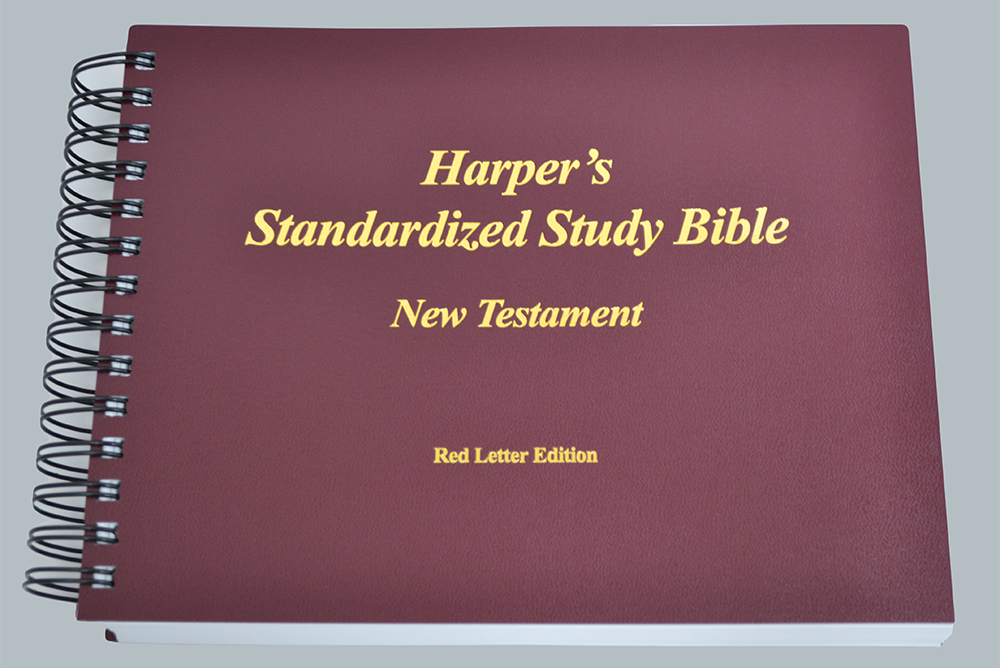
Harper’s Standardized Study Bible New Testament, Red Letter Edition
An original translation of the Greek New Testament into English with Jesus Christ’s words printed in red. The red text enables readers to easily locate the Lord’s spoken words at a glance. A true study Bible that is spiral bound and lays flat for ease of note taking. Each page dedicates one column for personal notes.
Learn More