

Rediscovering the Great Commission: Understanding Jesus’ Model to True Discipleship
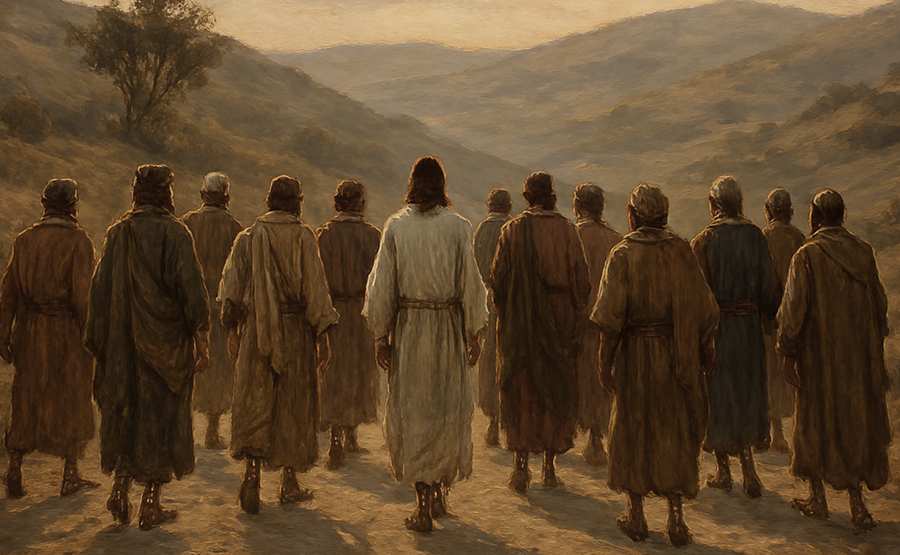
The Great Commission that Jesus Christ delivered to His disciples on a mountainside near the Sea of Galilee stands as a cornerstone of the Christian mission, yet its true nature and fulfillment remain misunderstood by many in the Church today, leading to modern discipleship challenges. In the Great Commission, Jesus issued two distinct commands, which are often conflated but carry significantly different implications. The following is what is known as the Great Commission:
“All authority in Heaven and on Earth has been given to Me. Therefore, go! Make disciples of all the Gentiles:
(1) baptizing them into the name of the Father and of the Son and of the Holy Spirit,
(2) teaching them to keep watch over everything—as much as I gave a commandment to you. And guess what! I am always with you, until the consummation of the current age.”(Matthew 28:18b–20) —Harper’s Standardized Study Bible
Mark tells us Jesus issued a separate directive just before His Ascension from the Mount of Olives:
“Go on into all the world! Preach the good news of the fulfillment of the promise to the whole creation! The one who has believed God’s promise and has been baptized will be saved, but the one who has refused to believe God’s promise will be condemned.
(Mark 16:15b–16) —Harper’s Standardized Study Bible
The True Meaning of the Great Commission and How It Differs From Merely Preaching
While the Church has largely succeeded to “preach the good news of the fulfillment of the promise” as Jesus commanded in Mark, it has fallen woefully short in fulfilling the Great Commission. This failure stems from a fundamental misunderstanding of Jesus’ intentions regarding the perpetuation of His message.
The crux of the Great Commission lies in two key phrases: “make disciples” and “teaching them.” These expressions reveal Christ expected the Church to continue the teacher/disciple tradition He had established. Jesus envisioned an unbroken chain of Teachers and disciples, with qualified Teachers passing down His Teaching to new disciples, who would in turn become Teachers themselves and hand it down to the next generation from the time of Jesus to the time of His Return.
To fully grasp the significance of this model, we must understand the historical context of the teacher/disciple relationship:
- This practice originated in ancient Greece, where philosophers like Homer were considered teachers of entire nations.
- Socrates, though resistant to the label, was called Homer’s greatest “disciple,” illustrating that one need not learn directly from a teacher to be considered their disciple.
- The Jewish Pharisees later adopted this Greek practice as a defensive measure against the encroachment of secular Greek philosophy.
By the time of Christ, the teacher/disciple relationship was firmly established in Judaism. The scribes mentioned in the New Testament were the Rabbis, drawing their disciples from the larger group of Pharisees. They considered themselves disciples of Moses, whose Teaching they claimed to perpetuate.
How the Promise Was Passed Down Through Generations
Now that you know the nature of the Hebrew Scriptures, let me explain the nature of the oral tradition that God gave to Adam and Eve. This oral tradition, The Teaching passed down from Adam and Eve, explains the prophecy and history that make up the promise.
God gave The Teaching to them as pure prophecy with the understanding that they and their descendants were to hand it down to the next generation orally until the time when God finally fulfilled the promise and accomplished what was promised.
Jesus’ Model of the Teacher/Disciple Relationship
Jesus, widely recognized as a Rabbi, utilized this same teaching method but with a crucial difference. Unlike the Jewish Rabbis who emphasized strict adherence to Mosaic law, Jesus presented what Mark describes as “a new doctrinal teaching with authority” (Mark 1:27). His approach stood in stark contrast to the legalism of the Pharisees, whom He accused of “Teaching teachings—religious precepts—of men” (Matt. 15:9).
Central to Jesus’ Teaching were His parables, often misunderstood today as mere moral lessons or convenient starting points for ethical discussions. In reality, these parables formed the very heart of His Teaching, requiring explanation that He provided only to His disciples, emphasizing the importance of the teacher/disciple relationship. As Matthew and Mark both attest, Jesus taught the multitudes in parables but explained their meaning privately to His followers (Matt. 13:36; Mark 4:34).
Jesus considered His parables to be a treasure trove of information. After explaining several parables to His disciples, He asked:
“Have you comprehended all these things?”
They tell Him, “Yes.”
Then He told them, “For this reason every scribe who has become a disciple in the kingdom of the heavens is just like a man—an owner of a house—who takes new and old things out of his treasure.”
(Matthew 13:51–52) —Harper’s Standardized Study Bible
This verbal exchange underscores the richness and depth of The Teaching contained within the parables.
Contrary to popular belief, Jesus had more than just twelve disciples. “The Twelve,” often referred to in the Gospels, were a select group chosen to be Apostles—a term meaning “one sent” for a specific purpose. In reality, Jesus had a multitude of disciples (Luke 19:37), including figures like Joseph of Arimathea and possibly Nicodemus.
The Early Church’s Commitment to Transmitting and Preserving Jesus’ Teaching
The Early Church initially followed Jesus’ model faithfully. Paul and the other Apostles devoted themselves completely to The Teaching. As Luke emphasizes in the Book of Acts, the Apostles’ Teaching was a cornerstone of the nascent Church:
And then they were dedicated to the doctrinal teaching of the Apostles and to their commonality—to the breaking of the loaf of bread and the prayers.
(Acts 2:42) —Harper’s Standardized Study Bible
This focus on The Teaching was so pronounced that it drew the ire of Jewish religious leaders, who commanded the Apostles “not to speak anything at all openly—or to teach—about the name of Jesus.” (Acts 4:18). Undeterred, the Apostles continued their mission, distinguishing between “teaching” and “preaching”—a distinction which Jesus Himself made, highlighting the true purpose of the Great Commission.
If the Early Church Was Committed to Preserving Jesus’ Teaching, Why Was the Original Teaching of Jesus Lost?
The inerrant transmission of The Teaching began to erode even within the Apostles’ lifetime. Paul, who received The Teaching through direct revelation from Jesus Christ, warned repeatedly of false teachers who would contaminate The Teaching. He foresaw a time when people would “pile up teachers for themselves, in agreement with their own selfish desires” and “turn their ear away from the truth; but on the other hand, they will be caused to swerve over to myths” (2 Tim. 4:3–4).
This prediction came to pass with alarming rapidity. By A.D. 95, a mere six decades after Jesus’ Crucifixion, Clement of Rome was compelled to write to the Corinthians addressing a “feud” that had broken out in that church. Presbyters appointed by the Apostles or their immediate successors had been unlawfully deposed, and a spirit of insubordination was rife. The loss of The Teaching within the first century after the Apostles’ deaths quickly led to a proliferation of individual interpretations and teachings, none of which were in complete agreement with the original.
By A.D. 200, the situation had deteriorated even further, disrupting the unbroken chain of Teachers and disciples the Lord intended. The learned theologians of the Church, who had already decided they could understand The Teaching for themselves, were busy arguing about the “right” way to interpret the Hebrew Scriptures. This approach stood in direct opposition to Jesus’ intention for His message to be explained through the teacher/disciple chain, not interpreted individually.
Peter had warned against this very thing, stating that “there is not any prophecy of Scripture of one’s own explanation” (2 Pet. 1:20). He linked this warning directly to the rise of false teachers who would “surreptitiously introduce sects of eternal damnation” (2 Pet. 2:1).
The loss of The Teaching within the first century after the Apostles’ deaths has led to a proliferation of individual interpretations and teachings, none of which are in complete agreement with any of the others. This confusion, according to the biblical text, is the work of the “liar and the father of it” (John 8:44), introducing chaos to obscure the Truth and prevent any attempt at preserving Jesus’ Teachings in the Church.
Where Are Jesus’ Disciples in the Modern Church?
So where are Jesus’ disciples today? In these Last Days, can the Church still become what Christ envisioned—a body “not having a stain or wrinkle” (Eph. 5:27)? The text suggests hope lies in a unique quality of Jesus’ Teaching. As He said:
“My doctrinal teaching is not Mine, but the doctrinal teaching of the One Who sent Me! If anyone is willing to act in accordance with His will, he will know—with regard to the doctrinal teaching—which of these two it is: from the living God or I am speaking of My Own accord.”
(John 7:16b–17) —Harper’s Standardized Study Bible
This statement implies that those truly committed to doing God’s will can still discern The authentic Teaching, even in our current state of confusion. The implications of that are profound and far-reaching. It challenges the complacency that has settled into much of modern Christianity, urging a return to the true teacher/disciple relationship Jesus established, addressing modern discipleship challenges. It also implores True Believers to consider the ramifications of the departure of the Church from Christ’s original intent and seek a renewal of authentic discipleship.
Modern “Discipleship” Has Strayed From Jesus’ Original Intent
The loss of The Teaching is not merely a historical curiosity, it is a critical issue facing the Church today. Without a return to this original model of discipleship and teaching the Church cannot prepare Believers for Christ’s Return.
Throughout this article, I’ve tried to maintain a tone of urgency and concern—because I believe this issue is deeply important. My goal is to challenge you to reconsider some common assumptions about the current state of the Church and to honestly ask whether our practices today truly reflect what Jesus intended when He gave us the Great Commission.
I’ve grounded what I’m sharing in both Scripture and historical context, because I want to show how this isn’t just a personal opinion—it’s rooted in biblical truth and the reality of how discipleship has changed over time. By tracing the shift (or more accurately, the drift) from Jesus’ original model through the Early Church and into our present-day expressions of faith, I’m making the case for why we need to return to The Teaching as He originally meant it to be passed down.
True Believers Need to Follow Jesus’ Model for the Teacher/Disciple Relationship
The contrast between Jesus’ approach and that of the Jewish religious leaders of His time is stark and instructive. While the scribes and Pharisees taught strict adherence to the law, Jesus offered a “a new doctrinal teaching with authority” that confounded and amazed His listeners. His parables, far from being simple moral tales, were complex Teachings that required explanation—explanation He provided only to His disciples.
This exclusivity inherent in fully revealing The Teaching only to His disciples highlights the importance Jesus placed on the teacher/disciple relationship. It wasn’t enough to hear the parables; one needed to understand them. The only way to gain understanding of Jesus’ parables is to be taught by a Teacher called of God. Only then can you be a true disciple. This model challenges the modern approach of making all teaching equally accessible to all people, regardless of their level of commitment or discipleship.
The Early Church’s adherence to this model is evident in the Book of Acts. The Apostles’ focus on Teaching, even in the face of persecution, demonstrates the paramount importance they placed on preserving and transmitting The Teaching. Their distinction between “teaching” and “preaching” further underscores the unique nature of The Teaching as something more than just evangelistic proclamation.
Paul’s warnings about false teachers take on new significance in light of this understanding. His concern was not just about doctrinal error, but about the corruption of the very method by which The Teaching was to be preserved and passed on.
Paul’s instructions to Timothy to “commit these things to men who believe God’s promise, those who will be worthy of consideration to teach others also” (2 Tim. 2:2) echo Jesus’ original commission, emphasizing the importance of maintaining the chain of discipleship.
The rapid deterioration of this model, as evidenced by Clement’s letter and the state of the Church by A.D. 200, is a sobering reminder of how quickly mankind can corrupt even the most divinely ordained systems. The shift from explanation to interpretation, from discipleship to academic theology, marks a significant departure from Jesus’ original intent.
This departure has led to the current state of the Church, where multiple interpretations and teachings compete for attention, none fully aligned with the original Teaching of Jesus. This confusion is not accidental but the work of the “liar and the father of it,” who has deliberately obscured the Truth through a proliferation of half-truths and outright lies.
There Will Once Again Be True Discipleship
Yet, even in this dire assessment, there is hope. Jesus’ statement about the discernibility of His Teaching to those willing to do God’s will offers a path forward. It suggests that true discipleship—a wholehearted commitment to following Jesus and doing God’s will—can still lead to an understanding of The Teaching, even in our confused times.
This perspective challenges every Believer to examine their commitment to discipleship:
- Are we content with surface-level understanding, or are we willing to commit ourselves fully to doing God’s will and thereby discerning The Teaching?
- Are we perpetuating the confusion by creating our own interpretations, or are we seeking to be part of that unbroken chain of disciples Jesus envisioned?
I’m leaving you with a blunt assessment: the state of discipleship in today’s Church is dire. We’ve drifted far from what Jesus actually taught and modeled. But here’s the truth—those who are genuinely willing to do God’s will can still recognize The true Teaching, even in these Last Days. That’s not a sentimental thought; it’s a call to action. It’s a challenge to wake up, to stop settling for watered-down religion, and to fully align with the real Teaching of Jesus Christ—no matter the cost.
In conclusion, the question “Where are Jesus’ disciples?” is not merely rhetorical. It is a call to action, a challenge to every Believer to consider their role in the preservation of The Teaching of Jesus, and to understand the true purpose of the Great Commission. It urges those who can see the Truth in what has been stated to move beyond surface-level Christianity and commit themselves to true discipleship, seeking to understand and live out The Teaching as Jesus intended. Only through such commitment can anyone hope to see the Church become what Christ envisioned—a Body of true disciples, faithfully preserving and living in accordance with His Teaching until His Return.
For those who seek a deeper understanding of the issues presented here, a comprehensive ebook is available that expands on these concepts. This resource provides additional historical context, scriptural analysis, and practical insights into reclaiming the true teacher/disciple relationship Jesus established. It offers a more thorough examination of how the Church has strayed from Christ’s original intent and what it means to be a true disciple in these Last Days.
FREE Downloadable Content
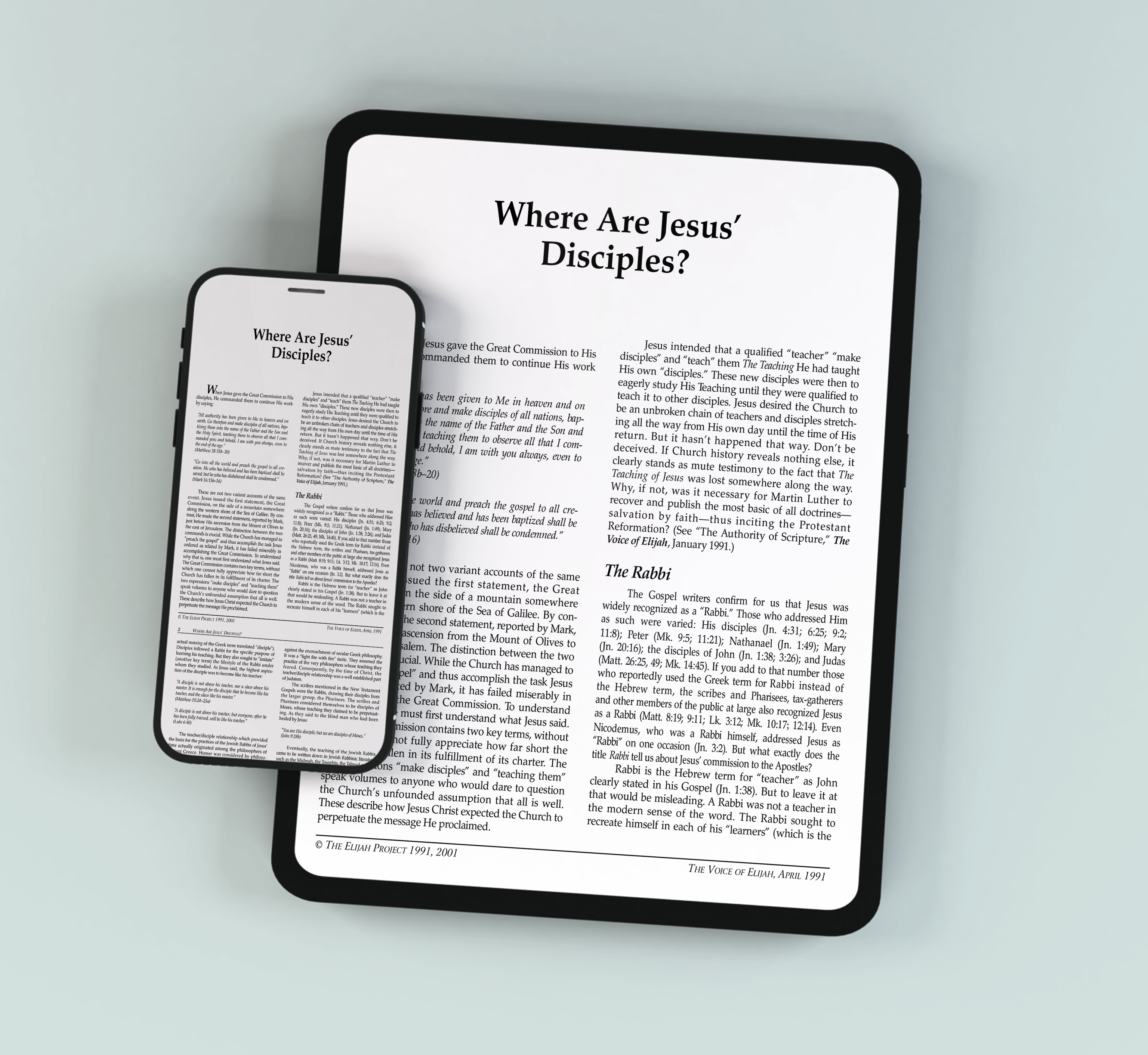
Free ebook: Where are Jesus’ Disciples?
View the full ebook based off this article. Learn more about End Times truths. The ebook (PDF) provides more detailed explanations, additional scriptural references, and further insights into The Apostolic Teaching. We encourage you to download it for a more comprehensive understanding of these vital concepts.
Read ebook Now!U.S. Only Offer: Get a Hard Copy of the HSSB Bible. Limited Supply!
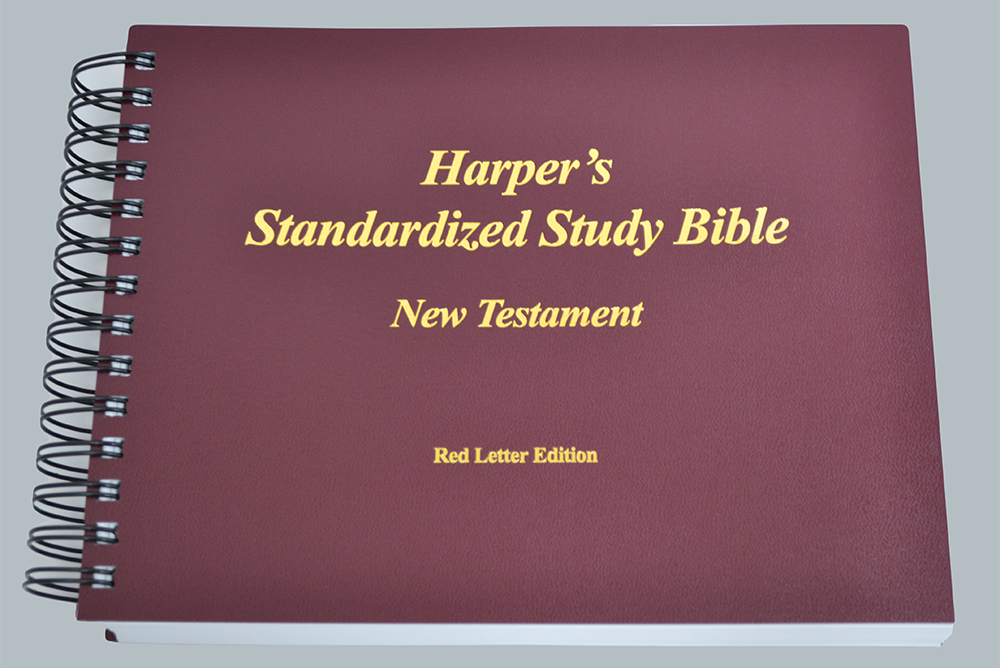
Harper’s Standardized Study Bible, New Testament, Red Letter Edition
An original translation of the Greek New Testament into English with Jesus Christ’s words printed in red. The red text enables readers to easily locate the Lord’s spoken words at a glance. A true study Bible that is spiral bound and lays flat for ease of note taking. Each page dedicates one column for personal notes.
Learn More