

How Did God Use Egyptian Beliefs to Communicate?
The Passover and Resurrection narrative found in Scripture reveals an intricate divine message that goes far beyond simple historical events. Understanding the significance of the Exodus in Christian theology requires recognizing how God used Egyptian religious practices to communicate profound truths about Jesus Christ through what we call parabolic pantomimes—a practice Jesus Himself would later continue.
Before we can understand how God used the Passover to reveal truths about Jesus Christ’s victory over death, we need to understand the ancient Egyptian beliefs He deliberately challenged. Let’s begin with an overview of their most important resurrection story—the myth of Osiris.
An Overview of the Myth of Osiris and Egyptian Resurrection
Sources of Egyptian Religious Knowledge
The primary sources for understanding Egyptian beliefs come from the:
- Pyramid Texts (writings on tomb walls),
- Coffin Texts (writings on coffins), and
- The Book of the Dead (a burial papyrus for high-ranking officials).
These texts focused on guiding the dead through the underworld to resurrection.
The Death and Resurrection of Osiris
The most complete account of the Osiris myth comes from the Greek writer Plutarch, who explained how:
- Osiris, an ancient Egyptian king, was murdered by his enemy Seth, who sealed him in a box and threw it into the Nile.
- After Isis, Osiris’ wife, recovered the body, Seth cut it into fourteen pieces and scattered them throughout Egypt.
- Isis gathered the pieces while their son Horus battled Seth.
- After Horus’ victory, he performed magic to “open the mouth” of Osiris, enabling his resurrection.
Egyptian Burial Rituals and Symbolism
The role of symbolism in biblical rituals takes on profound meaning when examined through Egyptian practices. Their elaborate burial ceremonies involved:
- carrying the Pharaoh’s mummified body in procession to the Nile,
- crossing by boat,
- and proceeding to the pyramid tomb.
Priests performed magical rites to “open the mouth” of the deceased king, preparing him for resurrection. Each element represented features of the spiritual realm:
- the Nile symbolized the underworld’s sea,
- the boat represented divine transport,
- and the pyramid stood for the cosmic Mountain of God.
The Pharaoh’s Journey to Resurrection
The resurrection imagery in the Old Testament becomes clearer when we understand that Egyptians believed their Pharaoh was Horus in life and would become Osiris in death.
According to the Pyramid Texts, the deceased Pharaoh had to prove himself as “the firstborn of the first-born gods” by hunting down other firstborn in the Realm of the Dead. This journey required divine guidance through treacherous regions, including the “Sea of Reeds.”
The Significance of the Red Sea (Sea of Reeds)
The original Hebrew text speaks of the “Sea of Reeds” rather than the “Red Sea,” which is a mistranslation that first appeared in the Greek Septuagint. The distinction between the Red Sea and the Sea of Reeds holds particular significance. According to Egyptian theology and the Pyramid Texts, the “Sea of Reeds” was a critical location in the soul’s journey through death for several reasons:
- It was a treacherous region in the underworld that every deceased soul had to navigate successfully to reach the “House of Osiris.” This area could manifest as either a marshy area called the “Field of Reeds” when water levels were low, or as the “Sea of Reeds” when flooded.
- The crossing method by a divine depended on the conditions mentioned above.
- Most importantly, it was where the soul performed a crucial purification ritual. The deceased would bathe in its waters while reciting specific words from the Pyramid Texts 920–922: “I am the essence of a god, the son of a god, the messenger of a god; I have come that I may bathe in the Field of Rushes.”
How God Mocks Egyptian (and Canaanite) Beliefs in the Passover and How He Used Those Beliefs to Teach Israel About Himself
God Challenges Pharaoh’s Divine Authority
The Exodus symbolism in Christianity takes on new depths when we recognize how God structured Israel’s departure as a divine mockery of these Egyptian resurrection beliefs. When God declared through Moses:
“Israel is My son, My first-born.”
(Exodus 4:22b) —NASB
He directly challenged Pharaoh’s claimed divinity. The midnight destruction of Egypt’s firstborn paralleled Egyptian beliefs about the timing of judgment in the underworld.
A Direct Connection Between the Passover and Christ
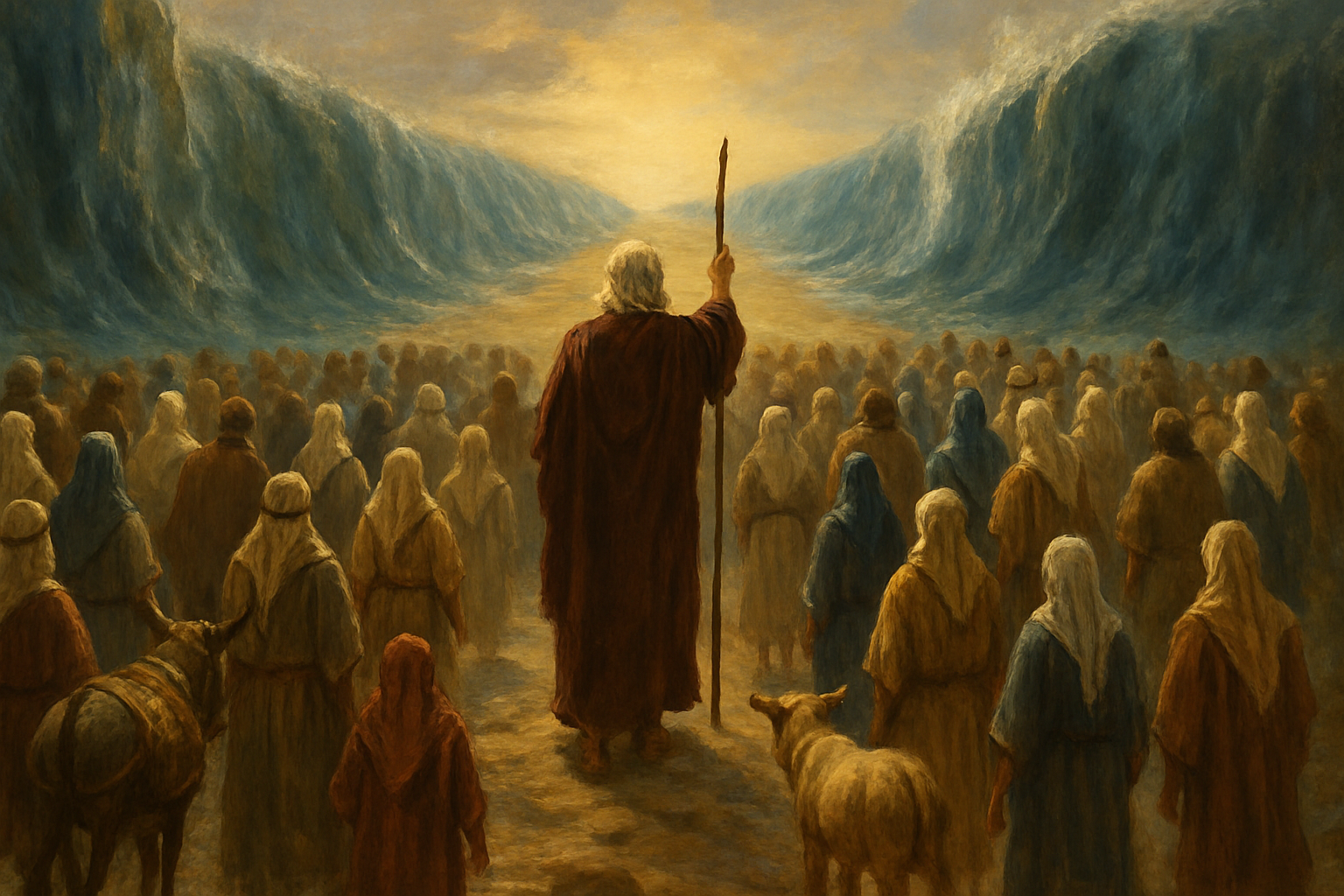
The Old Testament Passover and Jesus connect through this symbolic framework. By camping “in front of Baal-zephon, opposite it, by the sea” (Ex.14:2b) and then bypassing it, God dismissed both Egyptian and Canaanite claims to resurrection power. This deliberate rejection would become a significant theme in later prophetic messages. The crossing of the Sea of Reeds itself became a parabolic pantomime where God:
- Acted as the divine guide Israel needed.
- Parted the waters for them (matching one of the Egyptian methods of crossing).
- Deliberately bypassed Baal’s mountain afterward, showing contempt for Baal’s claimed resurrection powers.
This entire sequence served to mock Egyptian beliefs while simultaneously demonstrating that He alone had true power over death and resurrection. The crossing wasn’t just a miracle of escape—it was a carefully choreographed theological statement about God’s supreme power over all other claimed deities and their supposed control over the afterlife.
The people of Israel who experienced these events were not yet “Jews”—Judaism would emerge nearly a thousand years later, after the Babylonian Captivity. They had lived among Egyptian traditions for four centuries and were familiar with both Egyptian and Canaanite religious concepts, particularly the worship of El, the chief Canaanite deity who ruled as “eternal king” from his mountain tent.
God First Used the Name El (a Canaanite God) to Communicate With the Patriarchs
The Canaanites viewed El as the creator of all things, the “father of the gods” who held authority to depose other gods and establish those he favored. His tent on the mountain served as the meeting place for the divine assembly, where decrees became divine law. So God had revealed Himself to the Patriarchs as El, speaking in terms they understood; but at Sinai, He began teaching Israel more about Himself through the name Yahweh:
Then Moses said to God, “Behold, I am going to the sons of Israel, and I shall say to them, ‘The God of your fathers has sent me to you.’ Now they may say to me, ‘What is His name?’ What shall I say to them?” And God said to Moses, “I am Who I am” and He said, “Thus you shall say to the sons of Israel, ‘I am has sent me to you.’” And God, furthermore, said to Moses, “Thus you shall say to the sons of Israel, ‘The LORD, the God of your fathers, the God of Abraham, the God of Isaac, and the God of Jacob, has sent me to you.’ This is My name forever, and this is My memorial-name to all generations.”
(Exodus 3:13–15) —NASB
God Was Teaching the Israelites Through Familiar Religious Symbols
The Tabernacle embodied this Teaching—God instructed Moses to build it according to the pattern shown on the Mountain:
“Then you shall erect the tabernacle according to its plan which you have been shown in the mountain.”
(Exodus 26:30) —NASB
deliberately echoing Canaanite beliefs about El’s tent. The Hebrew term for “meeting” in “Tent of Meeting” parallels Canaanite descriptions of divine assemblies, showing how God used familiar religious concepts to teach new truths.
The Israelites Understood the Symbolism God Used to Teach Them
Throughout the ancient Near East, people believed the souls of the deceased lived in trees planted by their tombs. Sacred groves and stone slabs became associated with ancestor worship. The Prophets condemned such practices, with Jeremiah specifically addressing those who say to a tree:
“You are my father,”
And to a stone, “You gave me birth.”
(Jeremiah 2:27b) —NASB
Miriam’s “Song of the Sea” demonstrates how the Israelites understood these symbols:
“Thou wilt bring them and plant them in the mountain of Thine inheritance,
The place, O LORD, which Thou hast made for Thy dwelling,
The sanctuary, O Lord, which Thy hands have established.
The LORD shall reign forever and ever.”
(Exodus 15:17–18) —NASB
She recognized Israel would be “planted” as the living Tree of Life on God’s Mountain—though God had other plans. For when they reached God’s Mountain, God told them they could not even touch the Mountain, much less climb it to ascend in the Resurrection.
The Loss and Restoration of The Teaching
This Teaching—the Torah—was meant to pass through generations (Deut. 6:4–15). However, rebellious Israelites distorted it with their interpretations. Jesus later restored The Teaching by revealing it to His Apostles:
Then He opened up their mind to comprehend the Scriptures.
(Luke 24:45) —Harper’s Standardized Study Bible
establishing a discipling method for its transmission. Yet within a century of the Apostles’ deaths, The Teaching was again lost.
Through this elaborate system of symbolism, God made one powerful statement in language the Egyptians understood: “When Israel, My First-born Son, dies, it is He, not your Pharaoh, Who will triumph over death, Hell, and the grave, to attain to the resurrection from the dead. He will then declare His triumph over death by ascending from the Mountain of God to become King of Heaven.”
Now God is “restoring all things” concerning The Teaching. But as Jesus said:
“This generation will definitely not pass …”
(Matthew 24:34b) —Harper’s Standardized Study Bible
The time for generational transmission has passed—those who hear must use what they hear to save themselves. The message of the Passover Parable, with its rich symbolism and profound implications, speaks urgently to our present moment, calling us to understand these ancient symbols and their fulfillment in Christ.
Those who have ears to hear will hear. But remember Lot’s wife.
Conclusion: Key Takeaways
The Passover Parable stands as a masterful divine revelation, where God appropriated Egyptian beliefs about resurrection to proclaim a greater Truth. Through the Exodus narrative, He systematically challenged Egyptian theology, declaring Israel—not Pharaoh—as His firstborn, leading them through their own symbolic death and resurrection journey. This elaborate parabolic pantomime, understood through the lens of ancient Egyptian and Canaanite religious symbols, ultimately points to Jesus Christ’s triumph over death and His position as the true King of Heaven. The careful preservation and later restoration of The Teaching through Christ demonstrates God’s consistent purpose in using familiar cultural symbols to reveal eternal truths.
This blog post represents just a brief overview of the profound insights contained in our ebook, The Passover Parable. The ebook investigates deep into the rich symbolism, historical context, and theological implications of this remarkable divine message. We encourage you to explore our website, where you’ll find this ebook and numerous other free resources on the Online Library discussing other topics in Scripture in depth.
FREE Downloadable Content
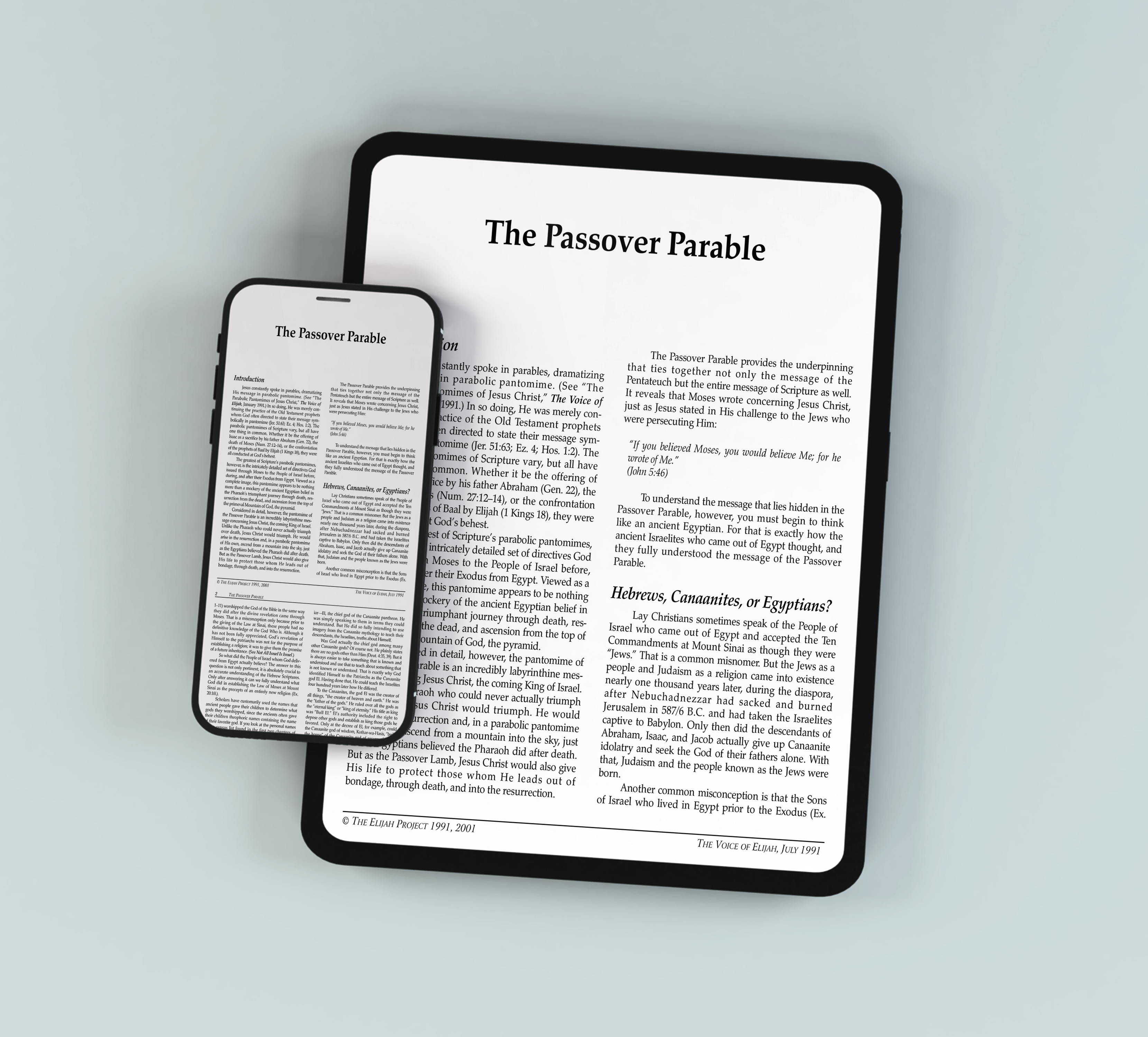
Free ebook: The Passover Parable
View the full ebook based off this article. Learn more about End Times truths. The ebook (PDF) provides more detailed explanations, additional scriptural references, and further insights into The Apostolic Teaching. We encourage you to download it for a more comprehensive understanding of these vital concepts.
Read ebook Now!U.S. Only Offer: Get a Hard Copy of the HSSB Bible. Limited Supply!
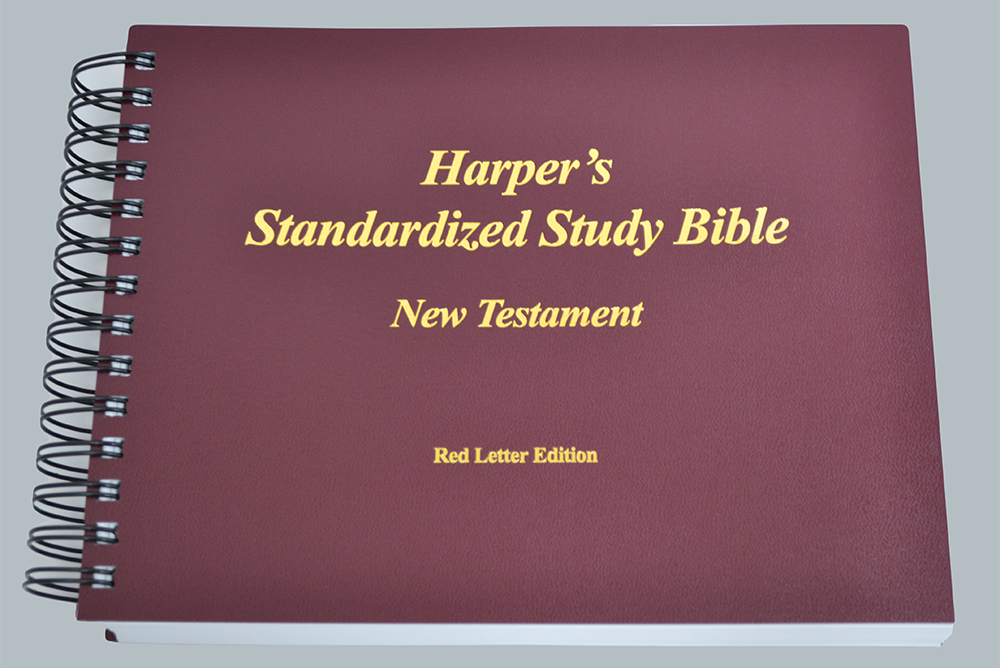
Harper’s Standardized Study Bible, New Testament, Red Letter Edition
An original translation of the Greek New Testament into English with Jesus Christ’s words printed in red. The red text enables readers to easily locate the Lord’s spoken words at a glance. A true study Bible that is spiral bound and lays flat for ease of note taking. Each page dedicates one column for personal notes.
Learn More